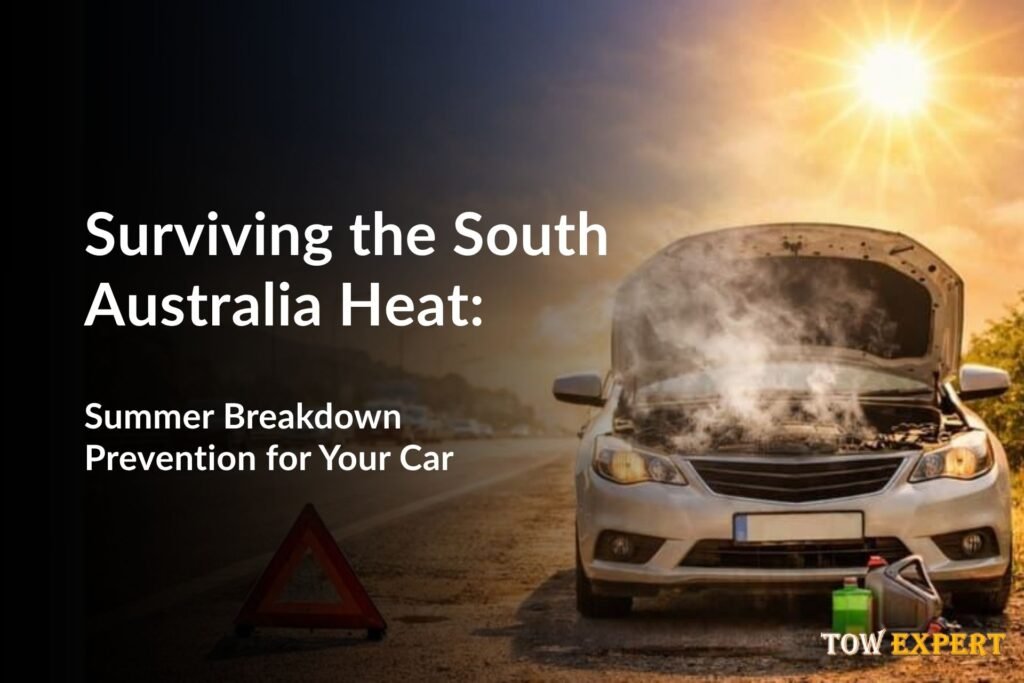
South Australian summers can be tough on both drivers and vehicles. Long, hot days can put extra strain on components such as the cooling system, battery and tyres, particularly when you’re travelling long distances or sitting in heavy traffic.
A summer car breakdown is more than an inconvenience when you’re stuck on the roadside in high temperatures. A vehicle that overheats, refuses to start or develops a tyre problem can quickly turn an ordinary trip into a stressful situation. Knowing how to prepare your vehicle and who to contact for towing services in Adelaide can make dealing with an unexpected breakdown much easier.
The good news is that many common problems can be identified before they leave you stranded. A few simple checks, combined with regular servicing and sensible preparation, can help reduce the risk of summer car breakdowns before you head out.
If your vehicle does break down despite your preparation, knowing how to respond safely and when to arrange professional towing assistance can help you get back on the road or safely transport your vehicle to a suitable destination.
If your vehicle does break down despite your preparation, knowing how to respond safely can make the situation much easier to manage.
Why Summer Heat Can Be Hard on Your Car
Hot weather doesn’t automatically mean your car will break down, but high temperatures can place additional demands on several vehicle systems. Problems that might have gone unnoticed in milder conditions can become more obvious during a long summer drive.
Here are some of the areas worth checking before the temperature rises.
Engine and Cooling System
Your cooling system plays an important role in keeping the engine within its normal operating temperature. Coolant, the radiator, hoses, fans and other components all need to work properly for the system to do its job.
A low coolant level or an existing cooling-system fault can become a bigger problem during a hot drive. If the temperature gauge begins climbing, a warning light appears or you notice steam or unusual smells, don’t simply continue driving and hope the problem disappears.
Stopping safely and allowing the vehicle to cool may prevent a minor issue from becoming a much more serious mechanical problem.
Car Battery
Your battery also deserves attention before summer. An older or weakened battery may struggle to start the vehicle when you need it most.
Signs of a battery that may need attention can include slow engine cranking, difficulty starting, dimming electrical components or repeated starting problems.
If your battery is approaching the end of its expected service life or has already shown signs of weakness, having it checked before a long summer trip can be worthwhile.
Tyres
Tyres are another part of your vehicle that should not be overlooked.
Before travelling, check the pressure against the vehicle manufacturer’s recommended settings and inspect the tyres for visible damage, uneven wear, cracks or bulges. Also check that the tread is in suitable condition for the journeys you have planned.
A quick inspection can be especially useful before a long drive, when a tyre problem could leave you stopped a considerable distance from home.
Air Conditioning
Air conditioning is about more than keeping the cabin comfortable. During very hot conditions, having a functioning cooling system inside the vehicle can make a long journey considerably more manageable.
If the air conditioning is blowing warm air, struggling to cool the cabin or behaving differently from normal, have the problem investigated rather than waiting until the hottest day of the year.
8 Ways to Prevent a Summer Car Breakdown
A little preparation can go a long way. Before heading out on a long trip, work through these basic checks.
1. Check Your Coolant and Cooling System
Check the coolant level according to your vehicle manufacturer’s instructions and look for obvious signs of leaks.
If you regularly need to top up coolant or notice a temperature warning, don’t treat it as normal. There may be an underlying problem that needs professional attention.
Never open a hot cooling system. Coolant and components can remain extremely hot after the engine has been switched off.
2. Inspect Your Battery
Look for signs such as corrosion around the terminals and pay attention to how the engine starts.
If the vehicle has recently needed a jump start or the engine has been turning over more slowly than usual, arrange a battery inspection before relying on the car for a long trip.
3. Check Your Tyre Pressure
Check your tyre pressure when the tyres are cold and follow the pressure recommendations provided by the vehicle manufacturer.
Don’t rely on appearance alone. A tyre can be underinflated without looking obviously flat.
Remember to check the spare tyre as well, if your vehicle is equipped with one.
4. Inspect Your Tyres for Damage
Walk around the vehicle and look at each tyre.
Pay attention to:
- Cracks or cuts
- Bulges
- Uneven tread wear
- Objects lodged in the tyre
- Low tread
- Other visible damage
If something doesn’t look right, have the tyre inspected rather than assuming it will be fine for another trip.
5. Check Your Engine Oil
Engine oil helps lubricate the engine’s moving components. Maintaining the correct oil level and following the manufacturer’s servicing recommendations are basic parts of vehicle maintenance.
Check the oil according to the instructions in your owner’s manual and don’t ignore an oil warning light.
If you notice repeated oil loss or other unusual symptoms, arrange an inspection before undertaking a long journey.
6. Test Your Air Conditioning
Turn the air conditioning on before you need it.
If the system isn’t cooling properly, produces unusual smells or makes unfamiliar noises, getting it checked before the weather becomes extremely hot can save you from discovering the problem halfway through a journey.
7. Check Your Lights and Windscreen
Good visibility matters during any journey.
Check your headlights, brake lights and indicators. Also inspect your windscreen and wipers, particularly if the wipers leave large areas uncleared.
These are simple checks, but they’re easy to overlook when preparing for a trip.
8. Don’t Ignore Warning Lights
Dashboard warning lights are there for a reason.
If a warning light appears, check your owner’s manual or arrange professional assistance to understand what it means. Continuing to drive when the vehicle is showing a serious warning can potentially make the underlying problem worse.
Before a Long Summer Drive, Use This Quick Car Checklist
Before setting off, take a few minutes to work through the basics:
- Check tyre pressure
- Inspect tyres for visible damage
- Check coolant according to the manufacturer’s instructions
- Check engine oil
- Check battery condition
- Test the air conditioning
- Check headlights, brake lights and indicators
- Check the windscreen and wipers
- Make sure you have enough fuel for the journey
- Carry water and other useful emergency supplies
You don’t need to spend hours inspecting your car every time you drive. The aim is to catch obvious problems before they become roadside problems.
Signs Your Car May Be About to Overheat
Overheating can develop quickly, particularly if the vehicle already has an issue with its cooling system.
Watch for signs such as:
- The temperature gauge moving higher than normal
- A temperature warning light
- Steam or unusual vapour
- An unusual smell
- Loss of engine performance
- Unusual noises from the engine bay
Don’t ignore these signs simply because the vehicle is still moving.
What Should You Do If Your Car Starts Overheating?
If your vehicle begins overheating:
- Find a safe place to stop as soon as practical.
- Turn the engine off when it is safe to do so.
- Keep yourself away from moving traffic and other hazards.
- Don’t open the radiator or coolant reservoir while the system is hot.
- Allow the vehicle to cool down.
- Arrange professional assistance if the problem doesn’t resolve or you aren’t confident the vehicle is safe to drive.
Trying to continue a journey with an overheating engine can turn a roadside problem into significant mechanical damage.
What to Do If Your Car Breaks Down in the SA Heat
Even a well-maintained vehicle can experience an unexpected fault. If you find yourself dealing with a car breakdown in hot weather, your first priority should be your own safety.
Get Yourself to a Safe Location
If the vehicle can be moved safely, try to get it away from moving traffic and into a suitable location.
A road shoulder, car park or other clear area may be preferable to stopping in a dangerous position. Don’t put yourself at risk trying to move a vehicle that cannot be driven safely.
Make the Vehicle Visible
Turn on your hazard lights and make other drivers aware that your vehicle has stopped.
Be particularly careful on busy roads and highways where traffic may be travelling at speed.
Don’t Attempt Repairs You’re Not Equipped to Perform
A hot engine can create additional hazards.
Don’t open a hot cooling system or attempt repairs you’re not equipped to carry out. If the vehicle has a serious mechanical problem, it is generally safer to arrange appropriate assistance.
Contact Roadside Assistance or a Towing Service
If the vehicle cannot be safely driven, you may need roadside assistance or vehicle recovery.
When you call, provide your exact location, vehicle make and model, what happened, whether the vehicle can roll, and where you would like it taken. Accurate information helps the towing provider understand the situation and determine what equipment may be required.
Summer Driving Tips for Adelaide and South Australia
Summer driving in South Australia can involve everything from busy urban roads to longer trips through areas where assistance may not be immediately nearby.
Before a longer journey, give yourself enough time to check the vehicle rather than rushing out the door. Carry water for the people travelling with you and make sure your phone is adequately charged.
It’s also worth paying attention to early warning signs. If your vehicle has already been running hotter than usual, struggling to start or showing a dashboard warning, deal with the problem before beginning a long journey.
For Adelaide drivers, traffic conditions can add another consideration. A vehicle that is already experiencing a cooling-system problem may face additional stress when sitting in slow-moving traffic on a hot day.
When Should You Call a Tow Truck?
Not every vehicle problem requires towing, but some situations aren’t worth the risk of driving further.
Consider arranging recovery if:
- The engine is overheating
- The vehicle won’t start
- The battery has failed
- A tyre is seriously damaged
- There is a significant mechanical fault
- Warning lights appear alongside unusual symptoms
- The vehicle has been involved in an accident
- The vehicle isn’t safe to drive
If you’re searching for a tow truck near me, don’t focus only on getting the vehicle moved. Explain what has happened and provide as much information as possible so the appropriate recovery equipment can be considered.
Continuing to drive a vehicle that may be unsafe can put you, passengers and other road users at risk.
How a Towing Service Can Help After a Summer Breakdown
When a vehicle cannot safely continue, recovery can be the practical next step.
A towing provider may be able to transport a disabled vehicle to a mechanic, dealership, home or another suitable destination. The appropriate method depends on the vehicle, its condition and the circumstances surrounding the breakdown.
For drivers who need Car towing in Adelaide, providing clear information at the time of booking can help the towing operator prepare for the recovery.
Tell them where you are, what has happened, whether the vehicle starts and rolls normally, and whether there is any visible damage.
Frequently Asked Questions About Summer Car Breakdowns
Can hot weather cause a car to break down?
Hot weather can place additional demands on vehicle systems, particularly when an existing fault is already present. Cooling-system problems, battery issues, tyre problems and other mechanical faults can become more noticeable during hot conditions. Regular maintenance and a basic inspection before a long trip can help identify potential problems early.
How can I prevent my car from overheating in summer?
Check your coolant according to the manufacturer’s instructions, pay attention to the temperature gauge and don’t ignore warning lights. Regular servicing can also help identify cooling-system problems before they result in a roadside breakdown. If the vehicle begins overheating, stop somewhere safe rather than continuing to drive.
Does hot weather affect car batteries?
High temperatures can be hard on vehicle batteries, particularly when the battery is already ageing or in poor condition. If you notice slow starting, repeated starting problems or other signs of a weak battery, consider having it checked before relying on the vehicle for a long summer journey.
How often should I check my tyres during summer?
Check your tyres regularly and before longer journeys, following the vehicle manufacturer’s recommendations for tyre pressure. Look for visible damage, uneven wear, cracks or bulges. If you notice something unusual, have the tyre assessed rather than assuming it is safe to continue driving.
What should I do if my car breaks down in extreme heat?
Move to a safe location if the vehicle can be moved without putting anyone at risk, switch on the hazard lights and keep away from moving traffic. If the vehicle is overheating, don’t open a hot cooling system. Arrange roadside assistance or towing if the vehicle cannot safely continue.
Stay Ahead of Summer Breakdowns
You can’t prevent every mechanical problem, but you can reduce the chances of being caught unprepared.
Checking your tyres, battery, coolant, oil, air conditioning and warning lights before a long journey takes relatively little time. More importantly, recognising early signs of trouble gives you the opportunity to deal with a problem before it leaves you stranded.
Good summer car breakdown prevention starts with simple maintenance and sensible preparation. If your vehicle does stop unexpectedly and cannot be safely driven, arranging professional recovery can help you get the vehicle to a suitable destination without taking unnecessary risks.
For Adelaide drivers, knowing who to contact before an emergency happens can also make a stressful situation easier to manage. Keep your vehicle maintained, prepare for the conditions and don’t ignore warning signs when your car tells you something isn’t right.