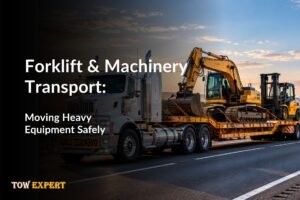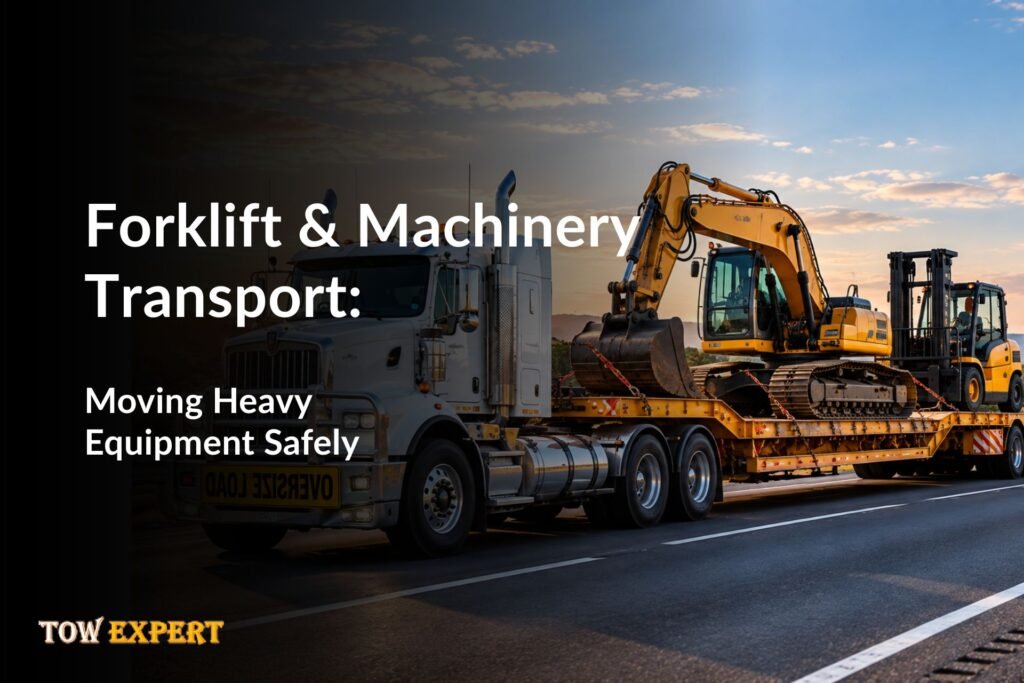
Moving a forklift or piece of heavy machinery is very different from moving a standard passenger vehicle. The weight, dimensions, condition of the equipment and access to the pickup and delivery locations all need to be considered before the journey begins. For businesses looking for forklift towing in Adelaide, understanding these requirements can help prevent avoidable delays and transport problems.
Heavy equipment may also be too large, heavy or damaged to move under its own power. Trying to handle it without suitable transport and loading equipment can create unnecessary risks to the machinery, property and people nearby.
This guide explains how heavy machinery is prepared for transport, what information should be provided before booking, how loading and securing are approached, and when professional assistance may be appropriate.
Why Is Forklift and Machinery Transport Different?
A forklift may look similar to other vehicles because it has wheels and can move under its own power. However, its design and weight make transportation a different task.
A typical forklift has a high centre of gravity, unusual dimensions and a substantial operating weight. Other machinery can be even larger or more difficult to manoeuvre. The transport method therefore needs to match the equipment rather than relying on a standard towing approach.
Heavy Weight and Size
Forklifts, excavators, loaders and other machinery can weigh considerably more than ordinary vehicles.
Weight affects several aspects of a transport job, including the type of transport vehicle required and the way the machinery can be loaded. The machine’s weight should be established as accurately as possible before arrangements are made.
Unusual Dimensions
Heavy equipment can be tall, wide or awkwardly shaped. Attachments and other components can also affect the overall dimensions.
These measurements matter at both ends of the journey. A machine that fits comfortably at one location may be difficult to manoeuvre through a narrow gate, warehouse entrance or loading area at another.
Machinery May Not Be Roadworthy
Some machinery is intended for use on private property rather than public roads. Other equipment may be damaged, non-operational or unsuitable for travelling independently.
A machine does not necessarily need to be operational for it to be transported, but its condition needs to be understood before the transport method is selected.
What Types of Machinery Can Be Transported?
Heavy equipment transport can apply to many different types of machinery, depending on the requirements of the individual job.
Common examples include:
- Forklifts
- Excavators
- Skid-steer loaders
- Scissor lifts
- Generators
- Construction equipment
- Agricultural machinery
- Industrial equipment
- Other heavy equipment
The appropriate transport arrangement depends on factors such as the machinery’s weight, dimensions, condition and the environment where loading and unloading will take place.
What Equipment Is Used for Heavy Machinery Transport?
There is no single transport setup that suits every piece of machinery. Equipment requirements can vary considerably between jobs.
Suitable Transport Vehicles
The transport vehicle needs to be appropriate for the machinery being moved. Its capacity, loading arrangement and physical dimensions all need to be considered.
For example, a compact machine may have very different requirements from a large excavator or industrial unit. Providing accurate information before booking allows the transport provider to determine what type of setup is appropriate.
Loading Equipment
Loading becomes particularly important when machinery cannot move under its own power.
A non-running machine may require additional assistance to position it for transportation. The appropriate loading method depends on the equipment, its condition and the pickup environment.
A clear assessment of the site can help identify potential obstacles before the machinery arrives at the loading area.
Restraint and Securing Equipment
Once machinery has been loaded, it needs to be appropriately secured for the journey.
The objective is to prevent unwanted movement during transportation. The machine’s position, weight and configuration all need to be considered when determining how it should be restrained.
A final check before departure can help confirm that the equipment is stable and ready for transport.
How is a Forklift Prepared for Transport?
Preparing a forklift for transportation involves more than simply getting it onto a transport vehicle. A basic preparation process can help identify problems before loading begins.
1. Assess the Forklift
Start by establishing the key details:
- Make and model
- Approximate weight
- Overall dimensions
- Operational condition
If the exact specifications are available, provide them before transport is arranged.
2. Check the Pickup Location
The surrounding environment can affect the loading process.
Consider whether the forklift is located at a:
- Warehouse
- Factory
- Construction site
- Yard
Also identify narrow entrances, gates, uneven surfaces or other access restrictions.
3. Determine the Loading Method
Establish whether the forklift:
- Can move under its own power
- Can roll
- Has mechanical damage affecting movement
- Has damaged wheels or tyres
This information helps determine how the machine can be positioned for transport.
4. Position the Machinery
The forklift should be positioned appropriately before transportation.
The available space, loading area and transport setup can all influence positioning. Careful preparation can make loading and securing more straightforward.
5. Secure the Equipment
The machinery should be appropriately restrained before departure.
The securing arrangement needs to account for the equipment’s size, weight and position so it remains stable throughout the journey.
6. Check Everything Before Departure
A final inspection should confirm that the machinery is stable, appropriately secured and ready to leave the pickup location.
Checking the setup before departure is much easier than discovering an issue after the journey has begun.
What Information Should You Provide Before Booking Machinery Transport?
The more useful information you provide at the beginning, the easier it is to understand what the job involves.
Try to provide:
- Type of machinery
- Make and model
- Approximate weight
- Dimensions, if known
- Current location
- Destination
- Whether it starts
- Whether it can move or roll
- Visible damage
- Access restrictions
- Photos, if requested
Why Accurate Information Matters
Consider the difference between saying:
“I need a forklift moved.”
and:
“I need a 3-ton forklift moved from a warehouse with a narrow entrance to a repair facility.”
The second description provides much more practical information. It tells the transport provider about the approximate weight, the type of equipment, the pickup environment and the reason for the move.
That information can make it easier to discuss the transport requirements before the job is scheduled.
Moving Non-Running or Damaged Machinery
Not every machine being transported will be operational.
Equipment may need to be moved because of:
- Engine failure
- Mechanical breakdown
- Damaged wheels
- Accident damage
- Flat tyres
- Electrical problems
- Extended periods of disuse
A machine that cannot start or move normally may require a different loading approach from operational equipment.
For this reason, its condition should be disclosed before transport is arranged. Details about damage can help the provider understand whether the machinery can be moved normally or requires additional loading considerations.
What Are the Main Challenges When Transporting Heavy Machinery?
Several practical issues can make machinery transport more complicated than ordinary vehicle transport.
Weight Distribution
The machine’s weight and position matter during transportation. Heavy equipment needs to be positioned and secured appropriately so its weight is managed safely throughout the journey.
Access and Manoeuvring
Pickup and delivery locations can present unexpected challenges.
Narrow gates, confined loading areas, warehouse entrances and restricted driveways may affect how machinery reaches the transport vehicle. The destination needs to be considered just as carefully as the pickup point.
Ground Conditions
The surface around the machinery can influence loading and manoeuvring.
Potential conditions include:
- Gravel
- Dirt
- Uneven ground
- Slopes
- Wet surfaces
These conditions are worth mentioning when arranging transport, particularly when the machine cannot move independently.
Loading and Unloading
Transport does not end when the machinery reaches the transport vehicle.
The delivery location also needs to be assessed. There should be a practical plan for getting the equipment from the transport vehicle to its intended position.
Discussing both pickup and delivery access beforehand can reduce surprises when the machinery arrives.
Forklift Transport for Different Situations
Heavy equipment may need to be moved for many different reasons. Understanding the purpose of the move can help clarify what needs to be considered.
Moving a Forklift Between Worksites
Businesses may need to relocate equipment between warehouses, construction sites, factories or other work locations.
The machine may be operational, but travelling on public roads may not be appropriate for the equipment. Transporting it directly can provide a practical way to move it between locations.
Transporting Machinery to a Repairer
A breakdown does not always mean machinery needs to remain at the original site.
Equipment that cannot operate normally may need to be taken to a repair facility. Providing details about the fault and whether the machine can roll can help with planning the move.
Relocating Industrial Equipment
Industrial machinery may be moved when a business changes premises, reorganises its facility or replaces equipment.
Because industrial equipment can vary substantially in size and weight, the transport requirements should be assessed for the individual machine.
Moving Construction Machinery
Construction projects often involve equipment being moved from one site to another.
Excavators, loaders, lifts and other machinery may need transport when a project changes location or when equipment is required at another worksite.
Recovering Broken-Down Equipment
A machine that has stopped working may still need to be moved from a workplace, yard or other property.
Providing information about the breakdown, visible damage and site access can help determine the practical requirements for recovery and transportation.
Businesses searching for Machinery Transport in Adelaide should provide these details before arranging a move rather than relying on a general description of the equipment.
Can Any Tow Truck Transport a Forklift?
Heavy machinery is not necessarily handled in the same way as a standard car.
The suitable transport vehicle and equipment depend on several factors, including:
- Machinery weight
- Overall dimensions
- Operating condition
- Whether it can move
- Loading requirements
- Pickup access
- Delivery access
For example, a small operational machine at an easily accessible site may present very different requirements from a damaged forklift inside a confined warehouse.
The safest approach is to explain exactly what needs to be moved and where it is located before arranging transportation.
When Should You Use Professional Machinery Transport?
Professional assistance may be appropriate when the equipment cannot or should not be moved normally.
Consider professional transport when:
- The equipment is too heavy to move normally.
- The machine is not roadworthy.
- It cannot start or move.
- It needs to be transported between worksites.
- It has been damaged.
- The pickup location is difficult to access.
- You do not have suitable equipment to move it safely.
A towing service in Adelaide may also be able to discuss the requirements of a particular machinery movement and determine what information is needed before proceeding.
How to Choose a Forklift & Machinery Transport Provider
Choosing a provider starts with understanding whether they can discuss the practical requirements of your particular job.
Before arranging transportation, ask about:
- Machinery type and weight
- Transport requirements
- Loading and unloading
- Pickup access
- Destination access
- Non-running equipment
- Damaged machinery
- Appropriate transport equipment
A useful conversation should focus on the actual equipment and circumstances rather than simply the distance between two locations.
Be ready to provide the machine’s approximate specifications, condition and location. Photos may also help when the provider requests them.
Frequently Asked Questions About Forklift Transport
Can a forklift be transported by a tow truck?
It depends on the forklift and the transport requirements. Weight, dimensions, condition, loading method and access can all affect what type of transport vehicle and equipment are appropriate.
How do you transport a forklift that does not run?
A non-running forklift may require additional loading assistance. The appropriate approach depends on why the machine cannot move, whether it can roll and the conditions at the pickup location.
Can damaged machinery be transported?
Damaged machinery may be transportable, but the damage should be disclosed before arrangements are made. Information about damaged wheels, tyres, mechanical problems or accident damage can help determine the loading requirements.
What information is needed to arrange forklift transport?
Useful information includes the machinery type, make and model, approximate weight, dimensions, location, destination, operating condition, visible damage and any access restrictions.
How do I prepare machinery for transport?
Begin by assessing its weight, dimensions and condition. Check the pickup and delivery locations, determine how it will be loaded, position it appropriately, secure it for transportation and complete a final inspection before departure.
Moving Heavy Equipment Safely
Moving heavy machinery requires more planning than transporting an ordinary vehicle. Weight, dimensions, condition and site access can all affect how the job needs to be approached.
Accurate information is one of the most useful things a machinery owner can provide. Knowing whether the equipment starts, moves or rolls, along with its approximate weight and dimensions, gives the transport provider a clearer understanding of the task.
Loading and securing are also important parts of the process. The pickup location and destination should both be considered, particularly when machinery is located in a confined or difficult-to-access area.
If you are planning to move a forklift, construction machine or other heavy equipment, discuss the equipment and site conditions with a suitable transport provider before arranging the move. A clear assessment at the beginning can help make the transportation process more organised and predictable.
Key Takeaways
- Heavy machinery requires a different approach from standard vehicle transport.
- Weight and dimensions influence transport and loading requirements.
- Non-running or damaged equipment should be identified before booking.
- Pickup and delivery access can affect the entire transport process.
- Machinery should be appropriately positioned and secured before departure.
- Accurate equipment information helps the transport provider understand the job.
- Professional assistance can be considered when machinery cannot or should not be moved normally.