Towing equipment is crucial for any vehicle owner who regularly hauls trailers, boats, or other heavy-duty cargo. However, choosing the right towing equipment can be a daunting task, particularly when it comes to understanding hitch receiver sizes. A hitch receiver is an essential component of a towing setup, and it plays a significant role in ensuring the safety and effectiveness of the towing process.
In this comprehensive guide, we will break down everything you need to know about hitch receiver sizes, including the different classes, how to choose the right one for your vehicle, and important factors to consider when selecting a towing system. Whether you are an experienced driver or new to towing, this article will provide you with all the necessary information to make an informed decision.
What Is a Hitch Receiver?
A hitch receiver is a metal frame mounted onto the chassis of a vehicle. It provides a connection point for towing accessories such as ball mounts, cargo carriers, or bike racks. The receiver is designed to handle different weights, and it is typically available in various sizes, corresponding to the size of the hitch ball mount or accessory being used.
The hitch receiver comes in several standard sizes, and understanding these sizes is essential for ensuring that your towing equipment can handle the load. When selecting a hitch receiver, you’ll need to consider the gross trailer weight (GTW) and the tongue weight (TW) capacity.
Different Hitch Receiver Sizes
Hitch receivers come in several standard sizes, and each size corresponds to a specific class of hitch that is designed for different towing capacities. Understanding these sizes is crucial when choosing the right hitch for your towing needs. Let’s go through the different hitch receiver sizes and the classes they belong to.
1. 1.25-inch Hitch Receiver
The 1.25-inch hitch receiver is commonly found on compact cars, sedans, and smaller SUVs. It is typically used for light-duty towing and non-towing applications such as bike racks and cargo carriers. This size is often referred to as the Class I receiver.
- Towing Capacity: A Class I hitch with a 1.25-inch receiver typically has a towing capacity of up to 2,000 pounds (907 kg) GTW and a tongue weight of around 200 pounds (91 kg).
- Common Applications: Light-duty trailers, small utility trailers, or carrying lighter loads like bikes or small carriers.
2. 2-inch Hitch Receiver
The 2-inch hitch receiver is the most common size and is widely used in passenger vehicles, trucks, and SUVs. It is versatile and offers a higher towing capacity compared to the 1.25-inch receiver. This size corresponds to Class II, III, IV, and V hitches, depending on the vehicle’s towing capacity.
- Towing Capacity: A 2-inch hitch receiver can support up to 10,000 pounds (4,536 kg) of GTW and a tongue weight of around 1,000 pounds (454 kg) in some Class III or IV models.
- Common Applications: This hitch is often used for medium-duty trailers, RVs, horse trailers, and larger utility trailers.
3. 2.5-inch Hitch Receiver
The 2.5-inch hitch receiver is typically found on larger trucks and commercial vehicles. It is designed for heavy-duty towing, offering increased strength and capacity compared to the 2-inch receiver. This receiver is usually used in Class IV and V hitches, providing the highest towing capacity.
- Towing Capacity: The 2.5-inch receiver can handle up to 12,000 pounds (5,443 kg) or more in GTW, with a tongue weight of up to 1,500 pounds (680 kg).
- Common Applications: Large RVs, boats, car haulers, and heavy-duty trailers.
Hitch Classes Explained
Hitch receivers are also categorized into different classes based on their towing capacities. Understanding the hitch class is important because it helps you determine which receiver size is most appropriate for your vehicle and towing requirements.
Class I Hitch
A Class I hitch typically uses a 1.25-inch receiver and is rated for light-duty towing. It is suitable for passenger cars, sedans, and compact SUVs that plan to tow smaller trailers.
- Maximum Towing Capacity: 2,000 pounds (907 kg) GTW.
- Maximum Tongue Weight: 200 pounds (91 kg).
- Common Use: Small utility trailers, bike racks, and cargo carriers.
Class II Hitch
Class II hitches use the 1.25-inch receiver but have a higher towing capacity than Class I. These are commonly found on larger sedans, minivans, and small SUVs.
- Maximum Towing Capacity: 3,500 pounds (1,588 kg) GTW.
- Maximum Tongue Weight: 350 pounds (159 kg).
- Common Use: Larger utility trailers, small boat trailers, and bike racks.
Class III Hitch
Class III hitches are the most common size for medium-duty vehicles, such as SUVs, trucks, and some minivans. These hitches use a 2-inch receiver and provide a robust towing capacity for a wide range of towing needs.
- Maximum Towing Capacity: 5,000 pounds (2,268 kg) GTW.
- Maximum Tongue Weight: 500 pounds (227 kg).
- Common Use: RV trailers, horse trailers, car haulers, and large cargo carriers.
Class IV Hitch
Class IV hitches are designed for larger trucks and SUVs that need to tow heavy-duty trailers. These hitches use the 2-inch receiver and provide significantly more capacity than Class III hitches.
- Maximum Towing Capacity: 10,000 pounds (4,536 kg) GTW.
- Maximum Tongue Weight: 1,000 pounds (454 kg).
- Common Use: Large campers, car trailers, and heavy-duty towing equipment.
Class V Hitch
Class V hitches are used for the heaviest towing applications. They typically use a 2.5-inch receiver and are mounted on full-size trucks and commercial vehicles. These hitches are designed for extreme towing and hauling.
- Maximum Towing Capacity: 12,000 pounds (5,443 kg) or more.
- Maximum Tongue Weight: 1,500 pounds (680 kg).
- Common Use: Commercial trailers, car haulers, and large horse trailers.
Choosing the Right Hitch Receiver for Your Vehicle
Selecting the right hitch receiver is essential for safe and effective towing. Here are the key factors to consider when choosing a hitch receiver for your vehicle:
- Towing Capacity: First and foremost, you need to determine the weight of the load you intend to tow. Each hitch receiver class has its own weight rating, so make sure the receiver you choose can handle the weight of your trailer and cargo.
- Vehicle Size: The size of your vehicle will influence the hitch receiver you can install. Smaller vehicles typically require Class I or II hitches, while larger vehicles like SUVs and trucks may require Class III, IV, or V hitches.
- Receiver Size: The size of the receiver should match the size of the hitch ball mount or other towing accessory you plan to use. Make sure you select the correct size to ensure a secure connection.
- Tongue Weight: The tongue weight is the downward force exerted on the hitch by the trailer. It’s important to ensure that your hitch can support the tongue weight of your trailer to avoid any potential safety issues.
- Safety Considerations: Always follow the manufacturer’s guidelines regarding towing capacity and safety. Overloading your hitch receiver can result in damage to your vehicle or, more importantly, unsafe towing conditions.
- Installation Compatibility: Make sure that the hitch receiver you choose is compatible with your vehicle’s frame and mounting points. Some vehicles may require additional hardware or modifications to accommodate a hitch receiver.
The Importance of Properly Matching Your Hitch to Your Trailer
One of the most critical aspects of towing safely is ensuring that your hitch and trailer are properly matched. It’s essential to understand the specific needs of your trailer, including its weight, type, and purpose, in order to choose the right hitch. For example, if you’re towing a boat, the weight distribution will differ from that of a utility trailer, meaning the hitch you select must be able to handle these differences.
The importance of matching your hitch to your trailer goes beyond just ensuring that the trailer is secure. A mismatched setup can lead to dangerous driving conditions, such as instability, swaying, or even detachment of the trailer while on the road. The wrong hitch can result in your trailer being improperly loaded, which in turn can affect the handling of your vehicle. This is why understanding your trailer’s weight and specifications is essential when determining the correct hitch receiver size and class.
The Role of Hitch Ball Mounts
Hitch ball mounts are key components in the towing system, connecting the hitch receiver to the trailer. These mounts come in different sizes to match the hitch receiver and trailer coupler. It’s important to choose the right ball mount because this will affect the overall safety and stability of your towing setup. The ball mount’s drop or rise should be selected based on the height of your vehicle’s hitch receiver and the height of the trailer’s coupler. This ensures that your trailer remains level when being towed, preventing excessive wear on the vehicle’s suspension and tires, and helping you maintain better control over the vehicle.
Another factor to consider is the size of the hitch ball, which comes in various diameters to fit the trailer coupler. Common sizes include 1-7/8 inches, 2 inches, and 2-5/16 inches. The ball size should be compatible with the trailer coupler to ensure a secure connection. Always check the weight capacity of both the ball mount and the hitch ball to avoid overloading the system. TowExpert in Alidade can assist in providing the right advice on hitch ball mounts and ensure you are fully equipped for your towing needs.
How to Inspect Your Hitch Receiver for Safety
Before hitting the road, it’s important to inspect your hitch receiver to ensure it’s in proper working condition. Regular maintenance of your towing equipment is crucial for both safety and longevity. One of the first things you should do is check for any signs of rust or corrosion on the receiver, as this can weaken the structure and lead to failure. Ensure that the hitch is securely attached to the vehicle and that all bolts and fasteners are tightened properly.
Additionally, inspect the receiver for any bends, cracks, or other signs of wear. If you notice any damage to the receiver, it’s vital to replace it before attempting to tow anything. A damaged receiver can compromise the integrity of your entire towing setup, putting both your vehicle and other road users at risk. Regular inspections and timely replacements will help keep you safe and ensure your towing equipment remains functional for years to come.
Understanding Towing Weight Distribution
Weight distribution is another important factor when selecting the right hitch receiver size. The total weight of the trailer should be distributed evenly across the vehicle’s rear axle and the trailer’s axles. This ensures that the vehicle handles the load properly and maintains optimal traction, especially when navigating steep inclines, declines, or sharp turns.
When towing, improper weight distribution can lead to issues such as trailer sway, which can cause the trailer to swing side to side and make it difficult to control the vehicle. It can also increase the likelihood of accidents and cause damage to both your vehicle and trailer. A weight distribution hitch helps to evenly distribute the load across all axles, improving vehicle handling and safety. TowExpert recommends investing in a weight distribution system if you’re planning to tow heavy or long loads, as this will improve stability and reduce the risks associated with towing.
Tow Expert Services for Towing Assistance
At TowExpert, we understand that towing is not always as straightforward as it seems. Whether you’re new to towing or an experienced driver, we’re here to provide you with expert guidance, reliable towing services, and equipment rental. Our team is trained to assist with all aspects of towing, from selecting the appropriate hitch receiver size and class to ensuring the safe transport of your cargo.
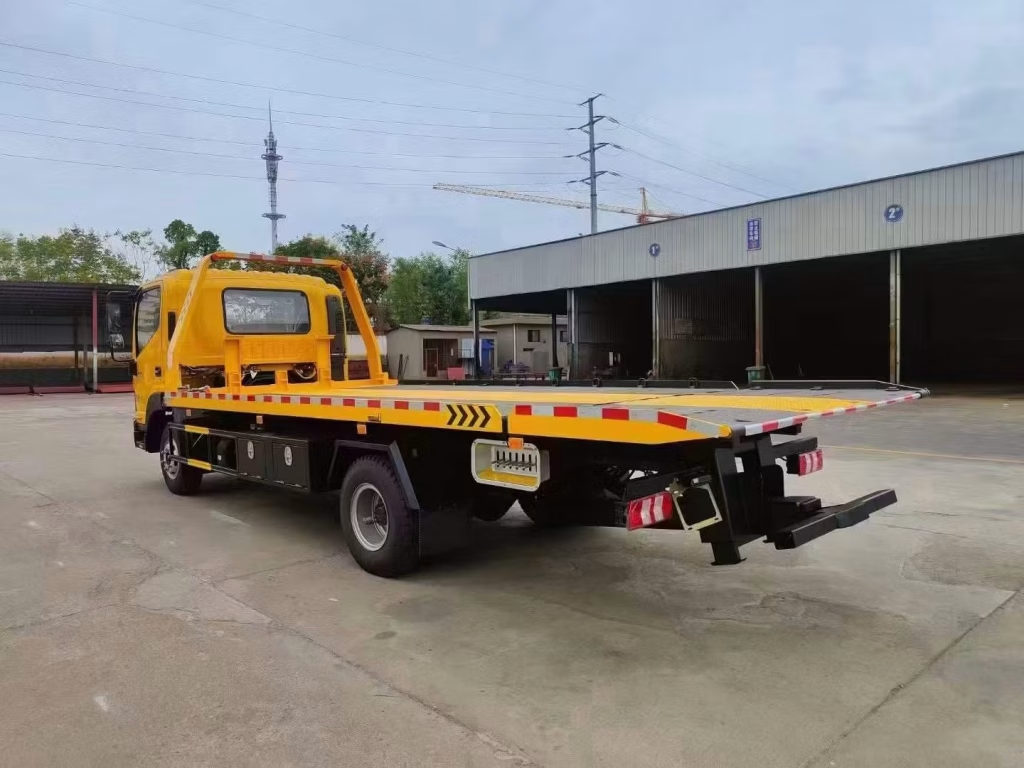
In addition to offering towing and roadside assistance, we also provide consultation for choosing the right hitch equipment for your needs. If you’re in Alidade, Australia, and unsure of which hitch receiver to install or how to set up your towing system, TowExpert is here to help. We also offer emergency towing services, so you can count on us to be there when you need us the most. Our fleet of professional tow trucks is available 24/7 to respond quickly to any situation, providing you with the peace of mind that your towing needs are in safe hands.
TowExpert: Your Trusted Towing Service in Alidade, Australia
When it comes to towing, you need a company you can trust to get the job done right. TowExpert, based in Alidade, Australia, provides professional towing services that cater to a wide range of needs. Whether you’re transporting a vehicle, moving heavy equipment, or need emergency towing assistance, TowExpert has the expertise and equipment to handle your situation.
At TowExpert, we understand that towing can be a complex and stressful task. That’s why our team of experienced professionals is here to guide you through the process. From selecting the right hitch receiver to ensuring your trailer is securely hitched, TowExpert is committed to providing you with a smooth, hassle-free experience.
Our fleet of well-maintained tow trucks is equipped to handle all types of towing, and we offer both local and long-distance towing services. If you need a reliable towing partner in Alidade, Australia, look no further than TowExpert. We’re ready to assist you with all your towing needs, no matter the size or complexity.