After a car accident, you may have to make several decisions at once. Is everyone safe? Can the vehicle still be driven? Where should it be taken? And, perhaps most importantly, will your insurer pay for the tow?
For drivers searching for a towing service Adelaide residents can use after an accident, understanding the insurance side of the process can prevent unexpected costs and confusion.
The short answer is that towing may be covered, but it depends on your insurance policy, the circumstances of the incident and the towing arrangements. Accident towing can also work differently from breakdown assistance.
This guide explains how towing can fit into an insurance claim, who may be responsible for the cost, what South Australian drivers should know about accident towing, and what information to keep for your insurer.
Does Car Insurance Cover Towing?
Car insurance can cover towing in some circumstances, but there is no single rule that applies to every policy.
Whether towing is covered generally depends on:
- The type of car insurance you have
- Whether the incident is covered by your policy
- Whether the vehicle is safe or roadworthy to drive
- Where the vehicle is being taken
- Any towing or storage limits in the policy
- Whether your insurer needs to approve the towing arrangement
For example, some comprehensive car insurance policies specifically include reasonable towing costs following a covered accident. AAMI and Allianz both publish examples of policies where towing following a covered incident can be included, subject to policy conditions and limits.
Whether car insurance covers towing depends on the specific policy. Some policies may include towing following an insured event, while others may have different conditions or limits.
It is also important not to confuse compulsory third party (CTP) insurance with cover for damage to your vehicle. In South Australia, CTP primarily deals with personal injury resulting from motor vehicle accidents. It does not operate as ordinary comprehensive vehicle insurance for repairing or towing your car.
When Can Towing Be Included in an Insurance Claim?
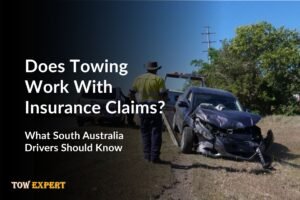
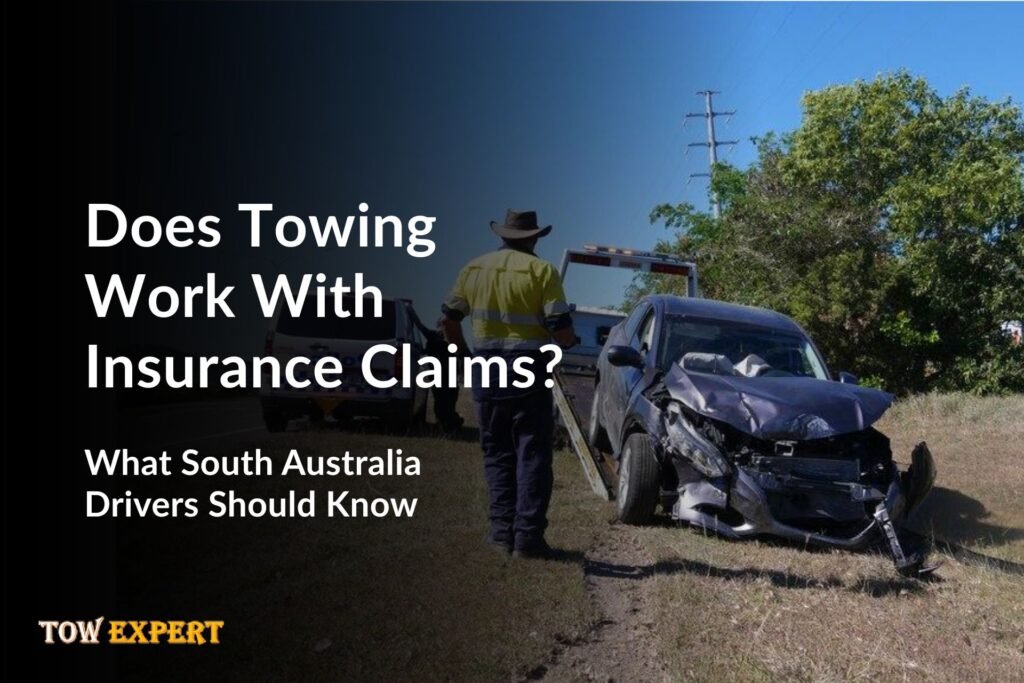
Towing becomes particularly relevant when an insured vehicle cannot safely remain at the accident scene or cannot be driven.
After a Car Accident
A collision can leave a vehicle with damaged wheels, suspension, steering, bodywork or other components that make driving unsafe.
If the vehicle cannot be safely driven, it may need to be recovered from the scene. Your insurer may then treat the towing expense as part of the claim if the incident and towing meet the policy conditions.
Do not assume that every tow automatically becomes an insurance expense. Check with your insurer where practical.
If the Vehicle Is Unsafe to Drive
A vehicle does not need to look completely destroyed before it becomes unsafe to drive.
Problems with steering, braking, wheels, tyres, suspension, fluid leaks or structural damage can create risks that are not always obvious at first glance.
If you are unsure whether the vehicle is safe to drive, it is better to avoid taking unnecessary risks. South Australian police guidance also allows a damaged vehicle to be moved to a safe location when appropriate, provided it is safe and possible to do so.
When the Vehicle Needs to Be Transported
After an accident, the vehicle may need to go to:
- A repairer
- An assessment location
- A secure storage facility
- An insurer-approved repairer
- Another location agreed with the insurer
The destination matters because an insurer may only agree to certain towing arrangements or costs.
Before the vehicle is moved, confirm where it is going whenever circumstances allow.
Does Insurance Cover Towing After an Accident?
It can, but the answer depends on your policy and the circumstances of the accident.
Some comprehensive insurance policies specifically provide towing following a covered incident. For example, AAMI states that its relevant cover can include the reasonable cost of one tow after a covered incident where the car is not roadworthy, is unsafe to drive or needs to be stored.
Other insurers may have their own limits, approved providers or destination requirements. Allianz, for example, states in its motor insurance documentation that reasonable protection, removal and towing costs may be covered after a covered accident, subject to the policy conditions.
The safest approach after an accident is:
- Check that everyone is safe.
- Move away from immediate danger where possible.
- Contact emergency services if required.
- Contact your insurer when practical.
- Ask whether they will arrange the tow.
- Confirm where the vehicle should be taken.
- Keep the towing invoice and other documentation.
There are situations where you may need to arrange a tow before speaking with your insurer, particularly if the vehicle is creating a safety hazard or cannot remain where it is. If that happens, keep a record of what occurred and contact the insurer as soon as reasonably possible.
Who Pays for Towing After a Car Accident?
There is no single answer because responsibility can depend on the insurance policy, the circumstances of the crash and who arranged the recovery.
Possible arrangements include:
Your Own Insurer
If you have appropriate cover and the accident is an insured event, your insurer may pay the towing cost under the policy.
Some insurers arrange the tow directly rather than asking the customer to organise it independently. AAMI, for example, says customers can have a tow arranged through its authorised providers after making a relevant claim.
Another Driver’s Insurer
If another driver was responsible for the accident, there may be circumstances where their insurer becomes involved in the costs associated with the damaged vehicle.
However, do not assume that responsibility has been established simply because another driver appears to have caused the crash.
You Pay Initially
In some situations, you may need to pay the towing provider and then ask your insurer whether the expense can be reimbursed.
If you do this, keep:
- The original invoice
- Payment receipt
- Details of the towing provider
- Photographs
- Accident information
- Your claim number
Excess and Other Conditions
Even when towing is covered, your policy may contain an excess or other conditions affecting the claim.
The key point is simple: confirm who is responsible for the towing expense before assuming the cost will be reimbursed.
Can You Choose Your Own Towing Company?
Sometimes, but the answer depends on the circumstances.
If you are dealing with an insurer-managed claim, the insurer may have preferred or authorised towing providers. Some policies may also specify where the vehicle should be taken.
South Australia has an additional rule for crashes in the greater metropolitan Adelaide area. Accident towing is managed through the Accident Towing Roster Scheme, and the state’s official guidance says only tow trucks directed through the scheme can attend those crash scenes.
SA guidance also says drivers have the right to decide where their vehicle is taken and should check the Authority to Tow form carefully before signing it.
If the situation is not an emergency, ask your insurer whether you can use your preferred towing provider before arranging the tow.
If the vehicle is in a dangerous position, however, safety should come first.
What Should You Do Before Arranging a Tow?
A few simple steps can make the insurance process easier.
Step 1: Check Whether Everyone Is Safe
Check yourself, passengers and other people involved in the crash.
If someone is seriously injured or there is immediate danger, call 000. SAPOL advises drivers to stop, assist injured people and move the vehicle to a safe location where this is safe and possible.
Step 2: Contact Your Insurer
Where practical, ask:
- Is towing covered?
- Will you arrange the tow?
- Do I need to use an approved provider?
- Where should the vehicle be taken?
- Are storage costs covered?
Getting clear answers early can reduce disputes later.
Step 3: Explain the Vehicle’s Condition
Tell the towing provider if:
- The vehicle will not start
- The wheels are damaged
- The steering is affected
- The vehicle cannot roll
- There is significant accident damage
- Access to the vehicle is restricted
Accurate information helps the operator understand what type of recovery may be required.
Step 4: Keep Documentation
Keep copies of:
- Towing invoice
- Receipt
- Accident photographs
- Claim number
- Vehicle details
- Other driver’s details
- Repair or assessment documentation
What Information Does Your Insurer Need for a Towing Claim?
The exact requirements vary between insurers, but having the following information available can make the process easier:
- Date of the accident
- Time of the accident
- Exact location
- Vehicle registration
- Vehicle condition
- Reason the tow was required
- Towing provider’s details
- Towing invoice
- Vehicle destination
- Photographs of the vehicle and accident scene
- Insurance claim number
- Other driver’s details
South Australian crash-reporting guidance also asks drivers for information such as the exact crash location, vehicle registrations and details of the people involved.
What If Your Car Is Towed Before You Make an Insurance Claim?
Sometimes a vehicle simply cannot remain at the accident scene.
For example, it may be blocking traffic, sitting in an unsafe location or being too badly damaged to drive. In those circumstances, waiting for an insurer to respond may not always be practical.
If the vehicle is towed before you make a claim:
- Keep the towing invoice.
- Record who arranged the tow.
- Note where the vehicle was taken.
- Take photographs if it is safe to do so.
- Contact your insurer promptly.
- Ask how the towing expense should be submitted.
Do not assume that arranging a tow automatically means your insurer will pay it. The claim still needs to be assessed against the terms of the relevant policy.
What If the Vehicle Is Towed to the Wrong Place?
The destination can affect what happens next.
A damaged vehicle may need to go to a:
- Repairer
- Dealer
- Assessment centre
- Secure storage facility
- Home address, where appropriate
- Insurer-approved repairer
In metropolitan Adelaide, the official driver’s handbook states that the driver has the right to decide where the vehicle is taken under the accident towing process. The destination should be written on the Authority to Tow form before it is signed.
Check the destination carefully before the vehicle leaves.
Also remember that storage and additional transport costs can be separate from the original towing charge. South Australian guidance warns that leaving a vehicle at a crash repair yard can result in storage fees.
What About Towing and Insurance After a Breakdown?
Accident towing and breakdown assistance are not necessarily the same thing.
Your car insurance may cover damage caused by an insured accident without automatically providing unlimited breakdown towing.
Some insurers offer roadside assistance as a separate or optional service. AAMI, for example, describes roadside assistance as a separate cover that can include towing after a breakdown.
That distinction matters.
If your vehicle simply stops working because of a mechanical or electrical problem, check whether your policy includes roadside assistance or another breakdown service. Do not assume that accident-related towing cover applies to every mechanical failure.
What Should You Ask Your Insurer About Towing?
Before authorising a non-emergency tow, ask these questions:
- Is towing covered under my policy?
- Is there a towing limit?
- Do I need to use an approved towing provider?
- Where should my vehicle be taken?
- Are storage costs covered?
- Is an excess applicable?
- Do I need approval before arranging the tow?
- What documents do I need to submit?
If you have a copy of your Product Disclosure Statement (PDS), check the sections dealing with towing, storage, claims, excesses and transport.
Towing After an Accident in Adelaide
For drivers in Adelaide, there are additional local considerations after a crash.
Greater metropolitan Adelaide operates an Accident Towing Roster Scheme. When a crash requires towing within the declared area, the centralised towing process is used to dispatch an appropriate operator.
If you are involved in a crash in metropolitan Adelaide and need a tow, the official South Australian guidance provides the Accident Towing Authority number, 08 8116 9209. Outside the metropolitan area, different arrangements apply and drivers can contact an available tow truck operator.
When arranging recovery, provide the exact location and explain the vehicle’s condition. Mention whether the car can start, roll or steer, and whether it is blocking traffic or positioned somewhere difficult to access.
For towing services near me, location information is especially useful because a recovery operator needs to know exactly where the vehicle is before determining how to approach the job.
How to Make an Insurance Towing Claim Easier
A little preparation can save time when you are already dealing with an accident.
Contact the Insurer Promptly
If your vehicle has been towed, let the insurer know as soon as reasonably possible.
Keep Every Towing Document
Do not throw away the invoice or receipt. These documents can help establish what was charged, when the vehicle was moved and where it was taken.
Photograph the Vehicle
Where it is safe, photograph the vehicle from several angles. Include visible damage and the surrounding accident scene.
Record the Destination
Write down where the vehicle was taken and whether it went directly to a repairer, storage facility or another location.
Keep the Claim Number
Once a claim has been lodged, keep the claim number with your towing and accident records.
Ask Before Authorising Additional Services
A basic tow can become more complicated if additional recovery equipment, storage or transport is required.
Before approving extra work, ask who will pay and whether your insurer needs to authorise it.
Frequently Asked Questions About Towing and Insurance
Does insurance pay for towing after an accident?
It can. Some comprehensive car insurance policies cover reasonable towing costs following a covered accident, but the amount, destination, provider and other conditions can vary. Your policy may also contain limits or an excess. Check your PDS or contact your insurer before arranging non-emergency towing where practical.
Can I claim towing costs on my car insurance?
You may be able to claim towing costs when the tow relates to an insured event and your policy provides that benefit. Keep the towing invoice, receipt and other relevant records. If you arranged the tow yourself, tell your insurer what happened and ask whether the expense can be included in your claim.
Can I choose my own towing company?
It depends on the circumstances. Your insurer may use approved providers or have requirements about where the vehicle is taken. In metropolitan Adelaide, accident towing is also subject to the state’s roster arrangements. The driver has rights concerning the vehicle’s destination under that process.
Who pays for towing after a car accident?
Payment depends on the circumstances and applicable insurance cover. Your own insurer may cover the expense under an eligible policy, another party may ultimately be responsible, or you may initially pay and seek reimbursement. Do not assume who will pay without checking the relevant policy and circumstances.
Is towing covered if my car breaks down?
Not necessarily. Breakdown towing may be provided through roadside assistance rather than accident-related car insurance. Some insurers offer roadside assistance as an optional benefit, while other policies have different arrangements. Check your policy to see whether mechanical breakdown and towing assistance are included.
Key Takeaways
- Towing coverage depends on the insurance policy and circumstances.
- CTP insurance should not be confused with insurance covering damage to your vehicle.
- Accident towing and breakdown assistance may be treated differently.
- Contact your insurer when practical before arranging non-emergency towing.
- Keep towing invoices, receipts, photographs and claim information.
- Tell the towing provider about the vehicle’s condition and exact location.
- Confirm where the vehicle should be taken.
- Check whether storage or additional recovery costs are covered.
- In metropolitan Adelaide, be aware of the Accident Towing Roster Scheme.
Final Thoughts
Don’t assume towing is automatically covered simply because you have car insurance.
The outcome can depend on the type of policy you hold, whether the accident is covered, how the tow is arranged and what your insurer’s terms say. Checking these details early can help prevent an unexpected bill and make the claims process easier.
If your vehicle needs to be recovered after an accident or breakdown, give the towing provider accurate information about its location and condition. This helps them understand the recovery requirements and arrange an appropriate response.