Can an electric car tow? it’s the question that’s been swirling around Australian BBQs and pub conversations ever since EVs started rolling into our driveways.
Picture this: you’re eyeing up that shiny new Tesla in the showroom, but your weekend warrior lifestyle has you wondering if it can handle your boat trailer or caravan. Good news electric vehicles can absolutely tow, and some might surprise you with their capabilities.
Let’s dive into everything you need to know about electric car towing in Australia, from power and capacity to real-world considerations that’ll help you make the right choice.
Electric Vehicle Towing Capacity: The Numbers Game
The short answer is yes, but it’s not quite as simple as your old diesel ute.
Current towing champions in the Australian EV market:
- Kia EV9: Leading the pack with 2,500kg towing capacity
- BMW iX eDrive40: 2,500 kg rated towing capacity, making it the electric car with the highest towing capacity currently available in Australia
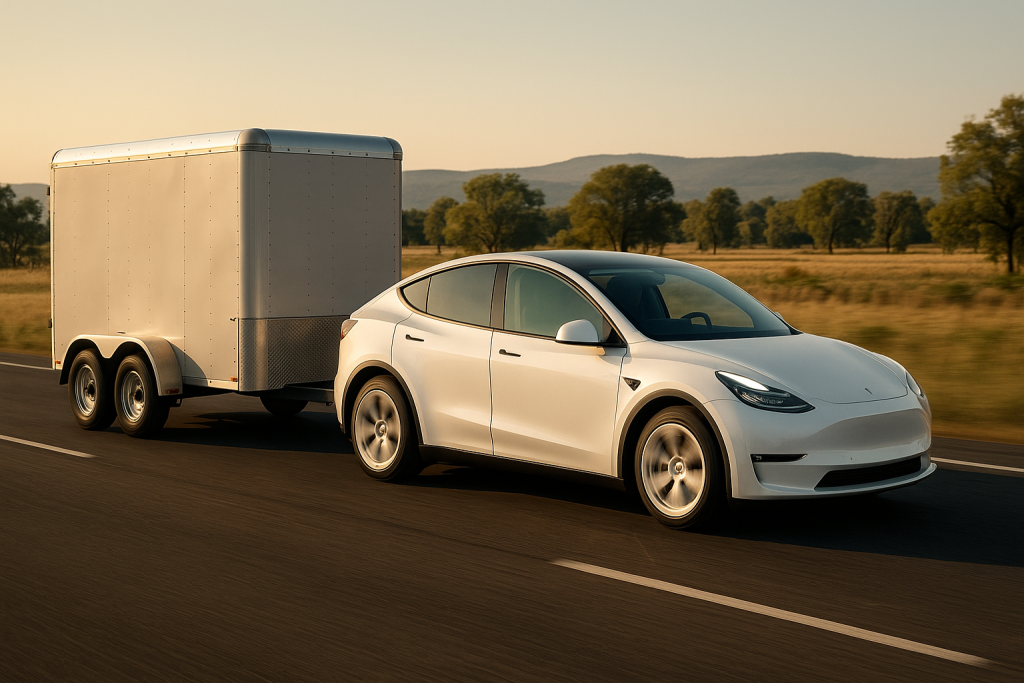
- Tesla Model Y: 1,600kg capacity
- Ford F-150 Lightning: 4.5 tonne towing capacity (when it arrives in Australia)
These figures put many electric cars in the same ballpark as mid-sized petrol and diesel vehicles. The difference lies not in the pulling power EVs have instant torque that’ll leave traditional engines in the dust but in other practical considerations.
Why Electric Cars Excel at Towing (In Some Ways)
Electric motors deliver maximum torque from zero RPM. This means no waiting for your engine to “get into its power band” the pulling force is there the moment you press the accelerator.
Key advantages include:
- Instant power delivery – no gear changes or turbo lag
- Smooth, consistent torque – easier on your trailer and cargo
- Quiet operation – no diesel rumble disturbing the campsite
- Precise speed control – helpful on boat ramps and tight spots
Comprehensive Car Insurance Cover Towing may include roadside assistance, allowing your vehicle to be towed in case of breakdowns or accidents.
The Range Reality: What Towing Does to Your Battery
Here’s where things get interesting (and potentially frustrating).
Towing can cut the range of an electric vehicle by more than 50%, which means that weekend trip to the coast might require some serious planning.
Real-World Range Impact
Studies show towing typically reduces EV range by:
- Light trailers (under 1,000kg): 20-30% range reduction
- Medium loads (1,000-2,000kg): 30-40% reduction
- Heavy towing (2,000kg+): Up to 50% or more range decrease
Factors affecting your towing range:
- Weight of trailer and cargo
- Aerodynamic drag (box trailers are worst offenders)
- Weather conditions (headwinds are battery killers)
- Terrain (hills will drain your battery faster)
- Driving style (lead foot = dead battery)
Planning Your Towing Journey
Unlike topping up with diesel, charging while towing requires extra consideration.
Charging station challenges:
- Many charging stations aren’t designed for vehicles with trailers
- You might need to unhitch to access some chargers
- Longer charging times when batteries are worked harder
Smart EV towers plan charging stops every 150-200km when towing, rather than the 300-400km possible without a trailer.
Best Electric Cars for Towing in Australia
Heavy-Duty Options
Kia EV9 The highest capacity EV towcar in Australia is the new Kia EV9, 2500kg, making it perfect for larger caravans and boat trailers. Its generous battery capacity helps offset some of the range penalty.
BMW iX The BMW iX large SUV is rated to tow up to 2.5 tonnes, combining luxury with serious pulling power. The trade-off? A price tag that’ll make your wallet weep.
Mid-Range Workhorses
Tesla Model Y With 1,600kg capacity, it handles most Australian towing needs. The extensive Supercharger network makes long-distance towing more feasible.
Mercedes-Benz EQC While the Mercedes-Benz EQC is rated to tow 1800kg overseas, it hasn’t been certified to tow in Australia due to our unique towing hardware requirements.
Light-Duty Options
Tesla Model 3 (Updated) Previously the Model 3 was not certified to tow in Australia, but the new one can lug up to 750kg – perfect for small trailers and light boats.
If you’re wondering Can I Do About a Car Parked in Front of My House, you can contact local authorities or leave a polite notice for the owner.
Electric vs Traditional Towing: The Honest Comparison
Where EVs Win
- Instant torque for easier hill starts and overtaking
- Smoother power delivery – less stress on trailer couplings
- Quieter operation – neighbors will thank you at 6 AM boat launches
- Lower running costs (when not factoring in purchase price)
Where Traditional Wins
- Refueling speed – 5 minutes vs 30-60 minutes charging
- Infrastructure – service stations everywhere vs limited charging while towing
- Range predictability – you know exactly how far you can go
- Purchase options – more variety in the heavy-duty segment
Practical Tips for Electric Vehicle Towing
Before You Buy
- Calculate your real needs – most Aussies tow less than they think
- Consider your typical trips – weekend warriors vs daily towers have different needs
- Check charging infrastructure along your regular routes
- Factor in the extra time for charging stops
When You’re Towing
- Pre-condition your battery before long trips
- Use eco modes to maximize range
- Plan charging stops with trailer access in mind
- Check tire pressures regularly – towing is hard on tires
- Allow extra time for your journey
Charging Strategies
- Charge to 100% before towing (unlike normal driving where 80% is fine)
- Look for pull-through chargers to avoid unhitching
- Have backup plans – know where alternative chargers are located
- Consider overnight charging at destinations
How Tow Expert Makes Electric Vehicle Towing Easier
When your EV towing adventure doesn’t go to plan, that’s where Tow Expert comes in.
Unlike many towing services that are still getting familiar with electric vehicles, Tow Expert understands the unique considerations of EV recovery and transport. Their fleet of tilt tray trucks can safely handle electric cars without the risk of damage from traditional wheel-lift towing methods.
What sets Tow Expert apart:
- 24/7 emergency response across Adelaide – perfect for those late-night charging mishaps
- Specialized equipment designed for modern vehicles, including EVs
- Experienced operators who understand electric car safety protocols
- Transparent pricing – no nasty surprises when you’re already having a rough day
Whether you’ve miscalculated your range while towing, encountered charging infrastructure issues, or faced unexpected breakdowns, Tow Expert’s quick response times and professional towing service ensure you’re back on track fast. Their reputation for quality workmanship and customer satisfaction makes them the go-to choice when your electric towing setup needs professional help.
The Future of Electric Towing in Australia
The electric towing landscape is evolving rapidly.
Coming soon:
- Ford F-150 Lightning with its impressive 4.5-tonne capacity
- Rivian R1T (if it makes it to Australia) with class-leading capabilities
- More charging infrastructure designed for towing combinations
- Better battery technology with improved range and faster charging
Long-term outlook: Electric utes and large SUVs will eventually match or exceed traditional towing capabilities. The missing piece isn’t the vehicles themselves – it’s the charging infrastructure that makes long-distance towing practical.
As charging networks expand and charging speeds increase, the convenience gap between electric and traditional towing will narrow significantly.
Making the Electric Towing Decision
The question isn’t really whether electric cars can tow – they absolutely can. The real question is whether they fit your specific towing needs and lifestyle.
Electric towing works well if you:
- Tow relatively light loads (under 2,000kg)
- Mostly do shorter trips (under 200km)
- Have access to home charging
- Don’t mind planning charging stops
- Value the performance benefits of instant torque
Stick with traditional for now if you:
- Regularly tow heavy loads (over 2,500kg)
- Take frequent long-distance towing trips
- Need the flexibility of quick refueling anywhere
- Can’t access reliable charging infrastructure
So, can an electric car tow? Absolutely but success depends on matching the right EV to your specific towing needs, planning your journeys carefully, and having reliable support like Tow Expert when things don’t go according to plan.
Ready to explore electric towing or need expert assistance with your current setup? Contact Tow Expert at 045-6262-486 for professional advice and reliable towing service across Adelaide.
Frequently Asked Questions
Q:1 Can electric cars tow caravans?
Yes, several EVs can tow caravans, with the Kia EV9 and BMW iX leading at 2.5 tonnes capacity. However, expect 30-50% range reduction, requiring careful trip planning and more frequent charging stops.
Q:2 How much does towing reduce electric car range?
Towing typically reduces EV range by 30-50%, depending on trailer weight, aerodynamics, weather conditions, and terrain. Light trailers under 1,000kg cause less impact than heavy loads over 2,000kg.
Q:3 Which electric car has the highest towing capacity in Australia?
Currently, both the Kia EV9 and BMW iX share the top spot with 2,500kg towing capacity. The Ford F-150 Lightning will offer 4.5 tonnes when it arrives in Australia.
Q:4 Can you charge an electric car with a trailer attached?
Many charging stations require you to unhitch trailers due to space constraints. Some pull-through chargers accommodate trailers, but they’re less common. Plan charging stops accordingly.
Q:5 Are electric cars good for towing boats?
Electric cars excel at boat ramp launches with instant torque and precise speed control. However, the range reduction means careful planning for longer trips to distant boat ramps or fishing spots.