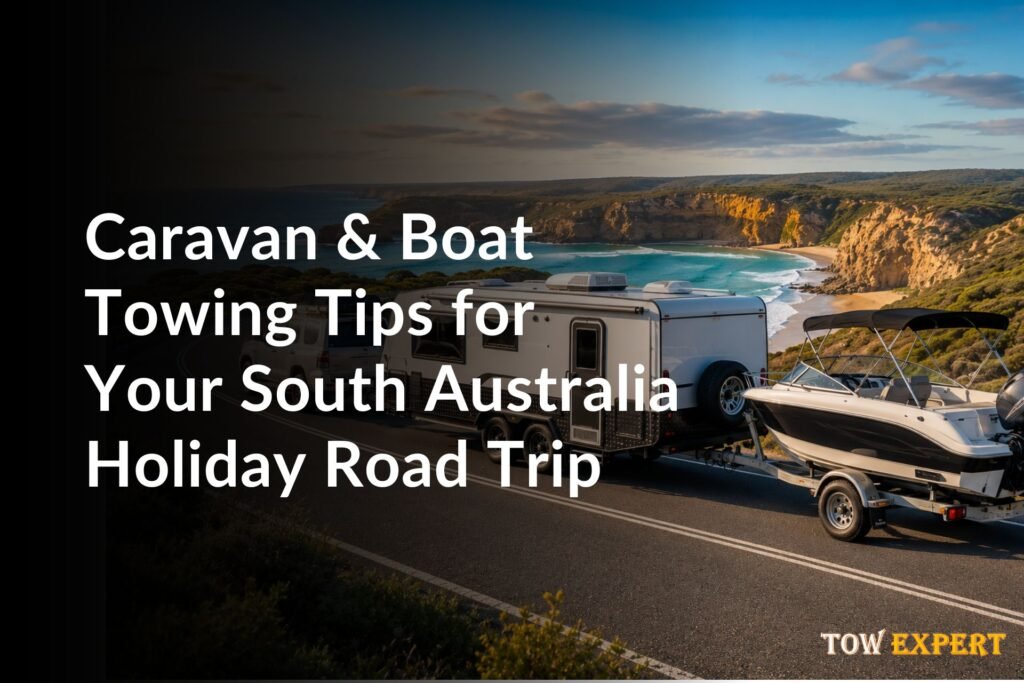
Planning a holiday road trip through South Australia with a caravan or boat can be an exciting way to explore the state. From coastal destinations to longer regional drives, having your own caravan or boat gives you more flexibility along the way.
However, towing a larger load requires more preparation than driving a standard vehicle. Tyres, brakes, weight distribution, coupling equipment and driving conditions can all affect how safely your vehicle handles on the road.
Whether you’re heading away for a weekend or planning a longer SA holiday, a few checks before you leave can help prevent avoidable problems. This guide covers practical caravan and boat towing tips, what to check before departure, how to prepare for a breakdown and when professional towing may be necessary.
What Should You Check Before Towing a Caravan or Boat?
Before starting your trip, take time to inspect both your vehicle and the trailer. A quick inspection can identify problems before you are several hours from home.
Check Your Tyres and Tyre Pressure
Inspect the tyres on your vehicle, caravan or boat trailer for visible damage, uneven wear and signs of deterioration. Check the recommended tyre pressure and make sure the spare tyre is also in usable condition.
Remember that towing adds extra load to the vehicle and trailer, so tyre condition becomes particularly important during a long trip.
Test the Brakes
Check that the vehicle and trailer braking systems are working properly before departure. If you notice unusual braking behaviour, vibrations or other problems, have the issue checked rather than starting the trip and hoping it improves.
Check Lights and Indicators
Test the trailer’s brake lights, indicators, tail lights and other required lighting. This helps other drivers understand what you are doing, particularly when changing lanes or slowing down.
Inspect the Coupling and Safety Chains
Make sure the trailer is correctly connected to the tow vehicle. Check the coupling, safety chains and other connection points before leaving.
Don’t rely on a visual glance alone. Take a moment to confirm everything is properly secured.
Check Weight Limits
Know the towing limits of your vehicle and trailer before loading your equipment. Overloading can affect acceleration, braking, steering and overall stability.
If you’re unsure about the correct limits, check your vehicle and trailer documentation before your trip.
Know Your Vehicle and Trailer Towing Limits
One of the most important parts of safe towing is understanding how much your vehicle is designed to tow.
Your vehicle’s towing capacity is not simply a number to approach without considering the rest of the load. The weight of passengers, luggage, water, equipment and the trailer itself all contribute to the overall load.
Understand Tow-Ball Weight
The weight placed on the tow ball can affect how the vehicle and trailer handle. Too much or too little weight in the wrong place can contribute to instability.
Consider the Gross Trailer Mass
The trailer’s overall loaded weight needs to remain within its applicable limits. This includes the caravan or boat trailer and the items you carry inside or on it.
Consider the Combined Weight
Don’t look only at the trailer. The combined weight of your vehicle, passengers, luggage and trailer also matters.
If you are unsure whether your setup is suitable, get the weights checked before travelling.
How to Prepare Your Caravan or Boat for a Road Trip
A good pre-trip inspection should cover more than the engine and tyres.
Inside the caravan, secure cupboards, appliances and other loose items. Make sure doors and hatches are properly closed and check that nothing can move around during the journey.
For a boat trailer, secure the boat and check straps, supports and other equipment used to keep the boat stable.
If you’re carrying water, fuel, camping equipment or other heavy items, consider where the weight is positioned. Uneven loading can affect how the trailer behaves on the road.
Before leaving, inspect the trailer frame, wheels, coupling and other visible components for signs of damage or wear.
How Should You Load a Caravan or Boat for Towing?
Loading your caravan or boat correctly can make a noticeable difference to towing stability.
Avoid putting all your heavy equipment in one location. Distribute the load appropriately and keep loose items securely stored.
Avoid Overloading
It’s easy to add extra camping equipment, sporting gear, food and other items before a holiday. However, every additional item contributes to the total load.
Before departure, remove anything you don’t actually need.
Secure Your Equipment
Items that are loose inside a caravan can move while travelling. Secure cupboards and storage areas and make sure outdoor equipment is firmly attached.
For boats, check that the boat and associated equipment are properly secured to the trailer.
Check the Load Before You Leave
Walk around the vehicle and trailer before departure. Check that nothing has been left unsecured and that the trailer remains properly connected.
A final inspection can take only a few minutes and may prevent a much bigger problem later.
Tips for Driving With a Caravan or Boat
Towing changes the way your vehicle responds to steering, braking and acceleration.
Give yourself more time and space than you would when driving without a trailer.
Allow Extra Braking Distance
A heavier vehicle combination generally needs more time and distance to slow down. Avoid following other vehicles too closely.
Take Corners Slowly
Approach corners at an appropriate speed and allow the trailer enough room to follow the vehicle.
Allow More Space When Changing Lanes
Your vehicle and trailer combination is longer and wider than a normal car. Check your surroundings carefully and allow enough space before changing lanes.
Be Careful in Windy Conditions
Strong winds can affect caravans and other trailers, particularly when travelling at higher speeds. Reduce speed when conditions require it and avoid sudden steering movements.
Watch for Trailer Sway
If the trailer begins to move from side to side, avoid making sudden steering corrections. Reduce speed in a controlled manner and respond according to your vehicle and trailer manufacturer’s guidance.
Take Regular Breaks
Long-distance towing can be tiring. Plan regular breaks, particularly when travelling during a holiday period.
Fatigue can affect concentration and reaction time, so don’t underestimate the value of stopping and resting.
What Should You Do If Your Caravan or Boat Breaks Down?
A breakdown can be particularly stressful when you’re towing a caravan or boat and are far from home.
If possible, move to a safe location away from moving traffic. Turn on your hazard lights and assess the situation without putting yourself or other road users at risk.
If the vehicle or trailer cannot be safely driven or towed normally, you may need professional recovery.
When contacting a towing provider, explain that you’re towing a boat rather than simply requesting a standard car tow. The size, weight and condition of the trailer can affect the equipment required.
If you’re searching online for a Tow truck near me, check that the provider can handle your particular vehicle and trailer combination before arranging recovery.
When Do You Need Caravan or Boat Towing in South Australia?
Professional towing may be appropriate when your vehicle or trailer cannot safely continue the journey.
Common situations include:
- Vehicle breakdown
- Trailer damage
- Flat or damaged tyres
- Mechanical problems
- Accident damage
- A caravan or boat becoming unsafe to tow
- Problems with wheels, steering or suspension
- A roadside incident requiring vehicle recovery
For example, if your vehicle still starts but the caravan trailer has suffered wheel or suspension damage, continuing to drive could make the situation worse.
In these circumstances, caravan towing Adelaide services may be able to provide appropriate recovery, depending on the vehicle, trailer and location.
Boat owners may also require boat towing Adelaide services when a boat trailer becomes damaged or the towing vehicle cannot safely continue.
How to Choose a Towing Service for a Caravan or Boat
Not every towing provider is equipped for every type of recovery.
Before booking a towing service in Adelaide, explain exactly what you are towing and what has happened.
Ask whether the provider can handle:
- Your vehicle type
- Caravan or boat trailer
- Approximate weight
- Trailer dimensions
- Damaged wheels or tyres
- A trailer that cannot roll
- A vehicle or trailer that cannot be safely connected
It is also sensible to ask about the destination and expected charges before authorising the recovery.
During busy holiday periods, towing demand may be higher, so having the details of a suitable recovery provider available before your trip can be useful.
What Should You Tell the Towing Company?
Clear information can help the towing operator understand what equipment may be required.
When calling, provide:
- Your exact location
- Nearby roads or landmarks
- Vehicle make and model
- Caravan or boat type
- Approximate size and weight
- Whether the trailer can roll
- Whether the wheels are damaged
- Whether the vehicle can steer
- Whether the caravan or boat can be safely connected
- Your preferred destination
- Any immediate roadside hazards
For example, saying that you have a damaged boat trailer with a locked wheel gives the towing provider much more useful information than simply saying you need a tow.
If you’re travelling in a remote area, provide as much location information as possible so the operator can find you efficiently.
Caravan and Boat Towing Checklist for Your SA Road Trip
Before leaving for your holiday, run through this quick checklist:
- Check towing capacity
- Check tyre pressure
- Inspect tyres for damage
- Test brakes
- Test lights and indicators
- Check the coupling
- Secure chains
- Distribute weight correctly
- Secure all equipment
- Check applicable trailer requirements
- Plan your route
- Carry appropriate emergency equipment
- Keep roadside assistance and towing details available
- Check your spare tyre and recovery equipment
- Take a final walk-around before departure
A few minutes spent checking your setup before leaving can help you avoid unnecessary delays during your trip.
Frequently Asked Questions
What should I check before towing a caravan in South Australia?
Check your vehicle and trailer tyres, brakes, lights, coupling, safety chains and applicable weight limits. You should also make sure the caravan is loaded securely and that loose equipment cannot move during the journey.
How do I know if my vehicle can tow a caravan or boat?
Check the towing capacity and other specifications provided for your vehicle. You also need to consider the loaded weight of the caravan or boat trailer, passengers, luggage and equipment. If you are uncertain, have the setup assessed before travelling.
What should I do if my caravan breaks down?
Move to a safe location if possible, use your hazard lights and avoid standing in a dangerous position near traffic. If the caravan or towing vehicle cannot safely continue, contact an appropriate recovery provider and explain the size, weight and condition of the vehicle and trailer.
Can a tow truck tow a boat trailer?
It depends on the vehicle, trailer and nature of the problem. Boat trailers can vary considerably in size and weight, so tell the towing provider exactly what you are towing and whether the trailer can roll, steer and be safely connected.
How much does caravan or boat towing cost in Adelaide?
Caravan towing cost Adelaide can vary depending on factors such as the distance, vehicle and trailer size, condition of the caravan or boat trailer, recovery equipment required and destination. Rather than relying on a generic price, explain your situation to the towing provider and ask about the expected cost before authorising the recovery.
Conclusion
A South Australian holiday road trip with a caravan or boat can be a great way to travel, but good preparation should come before the kilometres.
Check your towing capacity, inspect your tyres and brakes, secure your load and make sure the trailer is properly connected before you leave. Once you’re on the road, allow extra braking distance, take corners carefully and adjust your driving to the conditions.
If something goes wrong, don’t try to continue towing a caravan or boat that may be unsafe. A suitable professional towing provider can assess the recovery requirements and help transport the vehicle and trailer to an appropriate destination.
Taking a little extra time to prepare can make your holiday road trip safer, more comfortable and much less stressful.