When your vehicle breaks down or gets damaged, choosing the right towing method becomes more than just a matter of convenience. The wrong choice could lead to thousands of dollars in damage to your car. Understanding the differences between flatbed vs wheel-lift vs hook & chain towing helps you protect your vehicle while getting the best service for your situation.
Different towing methods serve different purposes. Your choice depends on your vehicle type, the distance you need to travel, your budget, and the level of protection you want. Let’s break down each method so you can make the right decision when you need it most.
What is Flatbed Towing?
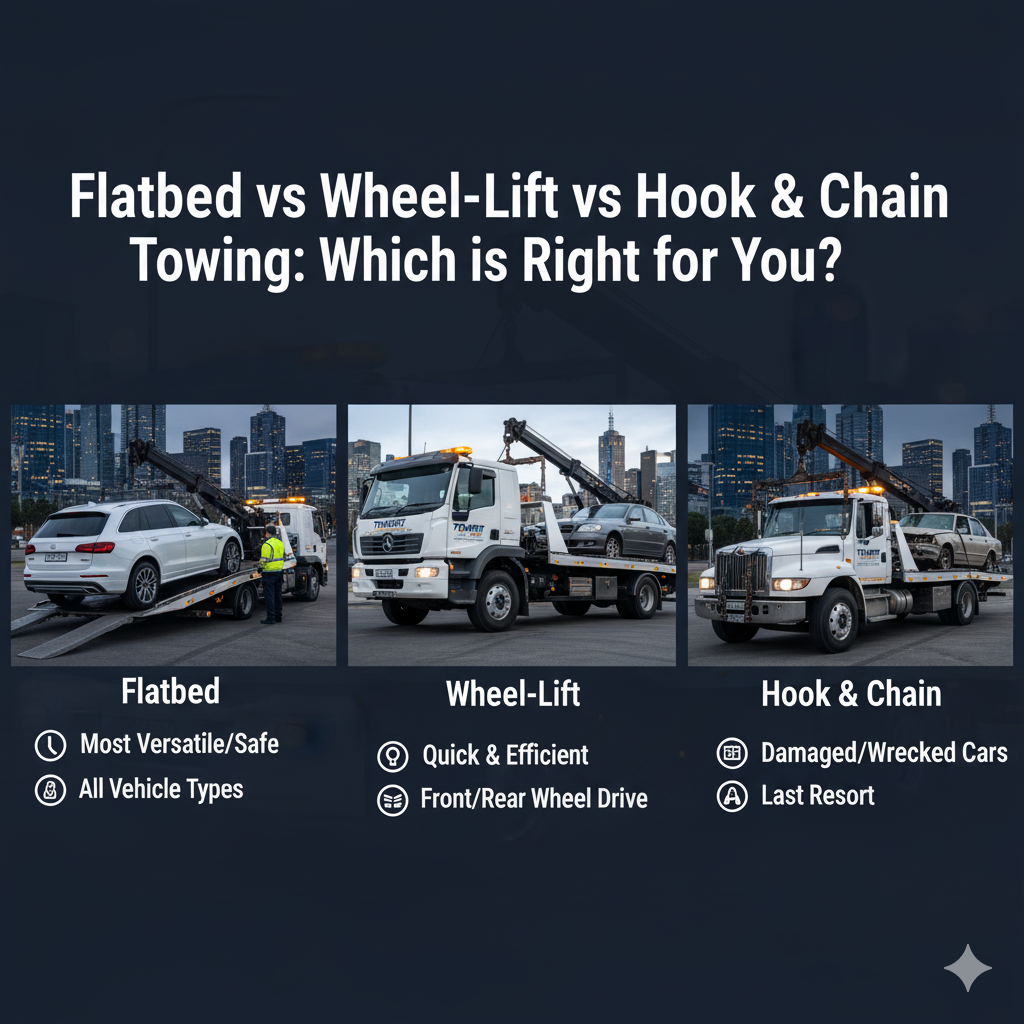
Flatbed towing uses a specialized truck with a large, flat platform that tilts and slides to ground level. Your entire vehicle sits on this platform with all four wheels off the ground. The tow operator drives or winches your car onto the bed, then secures it with straps and chains.
Flatbed towing is widely considered the safest and most versatile method. The platform design means your vehicle experiences no wear on its tires, transmission, or drivetrain during transport.
When to Choose Flatbed Towing
Flatbed towing works best for several scenarios:
- Luxury or sports cars that need maximum protection
- All-wheel drive or four-wheel drive vehicles that can’t be towed with two wheels on the ground
- Long-distance towing where you want zero risk of damage
- Severely damaged vehicles that can’t roll or steer properly
- Low-clearance vehicles that might scrape with other methods
Flatbed Towing Pros and Cons
Pros:
- Complete protection from road debris and weather
- No wear on tires, transmission, or suspension
- Works for any vehicle type or condition
- Most significant advantage of flatbed towing is security
Cons:
- Higher cost than other methods
- Takes longer to load and unload
- Limited availability in some remote areas
- Requires more fuel due to truck size
Understanding Wheel-Lift Towing
Wheel-lift towing uses a metal yoke that fits under either the front or rear wheels of your vehicle. A pneumatic hoist of a hydraulic lift then elevates the vehicle. This method lifts one end of your car while the other end rolls on its own wheels.
The wheel-lift system replaced older hook and chain methods for most standard vehicles. It provides better protection than chains while remaining more affordable than flatbed service.
Best Applications for Wheel-Lift Towing
Wheel-lift towing serves specific needs well:
- Front-wheel drive cars (towed from the front)
- Rear-wheel drive cars (towed from the rear)
- Short to medium distance towing (under 50 miles)
- Budget-conscious situations where cost matters
- Quick roadside assistance for minor breakdowns
Wheel-Lift Benefits and Drawbacks
Benefits:
- More cost effective than the flatbed method
- Faster loading and unloading process
- Good for tight spaces and urban environments
- Less likely to damage your bumpers than hook and chain tow trucks
Drawbacks:
- Two wheels remain on the road during transport
- Not suitable for all-wheel or four-wheel drive vehicles
- Risk of transmission damage if towed incorrectly
- Limited protection from road hazards
Hook and Chain Towing Explained
Hook and chain towing represents the oldest method still in use today. This system uses heavy-duty chains wrapped around the vehicle’s axle or frame, with a hook system lifting one end off the ground. The other end rolls on its wheels during transport.
Most professional services have moved away from hook and chain methods for passenger vehicles due to damage risks. Some operators still use this method for junk cars, salvage vehicles, or situations where vehicle condition doesn’t matter.
Also Read:- how to tow a vehicle
When Hook and Chain Makes Sense
Limited scenarios justify hook and chain towing:
- Salvage or junk vehicles headed for scrap
- Vehicles with existing heavy damage where more damage doesn’t matter
- Emergency situations where it’s the only available option
- Very short distances with careful operators
Hook and Chain Advantages and Disadvantages
Advantages:
- Lowest cost option available
- Quick setup for experienced operators
- Works on vehicles with damaged wheels or suspension
- Available on older tow trucks
Disadvantages:
- High risk of body damage, scratches, and dents
- Can damage bumpers, trim, and paint
- No protection for transmission or drivetrain
- Not recommended for vehicles you want to preserve
Comparing All Three Methods: Flatbed vs Wheel-Lift vs Hook & Chain Towing
Here’s how these three methods stack up against each other:
Safety and Vehicle Protection
Flatbed towing offers the highest protection level, wheel-lift provides moderate protection, and hook and chain carries the highest damage risk. Flatbed towing is arguably the safest method for the car as it minimizes the chances of wear and tear.
Cost Comparison
Hook and chain costs the least, wheel-lift falls in the middle, and flatbed commands premium pricing. Hook & chain towing is more affordable, but factor in the potential risks and costs of repairing any damage that may occur.
Speed and Convenience
Wheel-lift loading happens fastest, hook and chain takes moderate time, and flatbed requires the most setup time. The trade-off between speed and protection varies by situation.
Distance Considerations
For long distance towing, a flatbed is generally the better option to minimize wear and tear. Wheel-lift works well for medium distances, while hook and chain should only be used for very short hauls.
Also Read:- can a car be towed with a person inside
Choosing the Right Method for Your Vehicle
Your vehicle type determines which methods work safely:
By Drive Type
- Front-wheel drive: Wheel-lift from front wheels or flatbed
- Rear-wheel drive: Wheel-lift from rear wheels or flatbed
- All-wheel/four-wheel drive: Flatbed only (or wheel-lift with dollies)
- Manual transmission: Flatbed recommended for longer distances
By Vehicle Value
- High-value vehicles: Always choose flatbed
- Daily drivers: Wheel-lift for short trips, flatbed for long ones
- Older vehicles: Any method based on your budget
- Damaged vehicles: Match method to remaining value
By Distance
- Under 10 miles: Any method works
- 10-50 miles: Wheel-lift or flatbed
- Over 50 miles: Flatbed strongly recommended
How Tow Expert Helps You Make the Right Choice
At Tow Expert, we understand that choosing the right towing method protects both your vehicle and your wallet. TOW EXPERT is the safest, most reliable tow truck company in town that provides the car towing service at the most competitive price!
Our experienced operators assess each situation and recommend the best towing method based on your vehicle type, distance requirements, and budget constraints. We maintain a modern fleet that includes flatbed trucks for maximum protection and wheel-lift units for cost-effective solutions.
What sets Tow Expert apart is our commitment to transparency. We explain why we recommend specific methods and never pressure you into more expensive options than you need. Our team takes pride in matching the right equipment to your specific situation, whether that’s a luxury car requiring flatbed transport or a routine tow where wheel-lift makes perfect sense.
We also provide 24/7 emergency response throughout Adelaide, ensuring you get professional advice when you need it most. Our operators carry the proper licenses and insurance, giving you peace of mind that your vehicle is in qualified hands.
Making Your Decision: Key Factors to Consider
When choosing between flatbed vs wheel-lift vs hook & chain towing, consider these factors:
Vehicle Factors
- Drive type (front, rear, all-wheel, or four-wheel drive)
- Current condition and any existing damage
- Age and value of your vehicle
- Ground clearance and special features
Situation Factors
- Distance to destination
- Weather conditions
- Time sensitivity
- Available budget
Long-term Considerations
Spending more on flatbed towing often saves money by preventing damage. A small paint scratch or transmission problem can cost hundreds more than the difference between towing methods.
The Bottom Line
Flatbed vs wheel-lift vs hook & chain towing each serves specific purposes, but flatbed provides the best protection while hook and chain offers the lowest cost. Wheel-lift towing strikes a middle ground for many everyday situations.
Your choice should prioritize your vehicle’s safety and your long-term costs. When in doubt, ask your towing operator for their professional recommendation based on your specific situation.
Connect with Professional Towing Services
Don’t let a breakdown catch you unprepared. Save the contact information for a reliable towing service that offers multiple towing methods. At Tow Expert, we’re ready to help you choose the right towing solution and get you back on the road safely. Contact us at 045-6262-486 or visit towexpert.com.au to learn more about our comprehensive towing services.
Frequently Asked Questions
Q: Can I tow my all-wheel drive car with wheel-lift towing?
All-wheel drive vehicles should only be towed using flatbed methods or wheel-lift with dollies to prevent drivetrain damage. Towing with two wheels down can severely damage the transmission and transfer case in AWD vehicles.
Q: How much more does flatbed towing cost compared to wheel-lift?
Flatbed towing typically costs 20-40% more than wheel-lift towing, but this varies by distance and location. The extra cost often justifies itself by preventing potential damage that could cost hundreds in repairs.
Q: Is hook and chain towing ever recommended for modern vehicles?
Hook and chain towing is rarely recommended for vehicles you want to preserve. It’s mainly used for salvage vehicles, junk cars, or emergency situations where other methods aren’t available.
Q: What’s the maximum distance safe for wheel-lift towing?
Wheel-lift towing works safely for distances up to 50-75 miles, depending on road conditions. For longer distances, flatbed towing prevents unnecessary wear on tires and drivetrain components.
Q: Can weather conditions affect which towing method I should choose?
Yes, severe weather conditions like heavy rain, snow, or ice favor flatbed towing because your vehicle stays completely protected. Wheel-lift and hook and chain methods expose your car to weather damage during transport.