When your vehicle breaks down unexpectedly, choosing the right towing service can make all the difference between a smooth resolution and a frustrating ordeal. The towing industry presents consumers with two main options: local independent towing companies and large franchise operations. Each approach offers distinct advantages and drawbacks that could impact your experience, cost, and overall satisfaction.
Understanding these differences helps you make informed decisions during stressful roadside emergencies. Whether you’re dealing with a flat tire, engine failure, or accident recovery, the choice between local tow truck services and franchise companies affects response time, pricing, and service quality.
Understanding Local Tow Truck Services
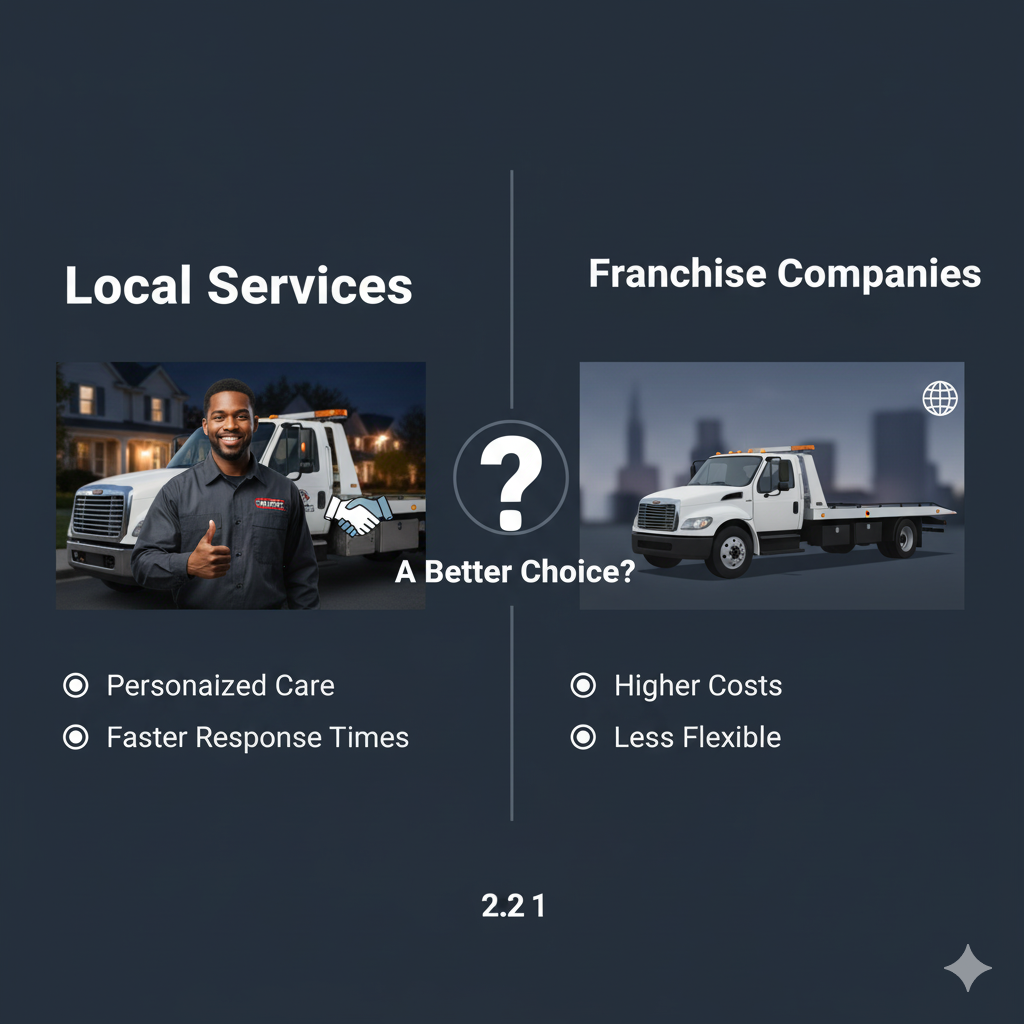
Local towing companies represent independent businesses that serve specific geographic areas. These family-owned operations typically focus on building strong community relationships and providing personalized customer service. Local companies usually have a smaller service area, allowing them to respond promptly to your call for assistance.
Local operators often develop deep knowledge of their service territories, including optimal routes, common trouble spots, and area-specific challenges. This familiarity translates into faster response times and more efficient service delivery. Many local companies operate 24/7 emergency services while maintaining flexible scheduling for planned vehicle transport needs.
The personal touch distinguishes local services from larger competitors. Business owners frequently handle customer calls directly, creating accountability and ensuring quality control. This direct communication often results in customized solutions that address individual customer needs rather than following rigid corporate protocols.
Also Read:- Can you tow an automatic car
Key Benefits of Local Towing Services
Local towing companies excel in several critical areas that matter most during emergencies. Response time stands as their primary advantage, with many local operators reaching customers within 30 minutes or less. Their intimate knowledge of local roads, traffic patterns, and shortcuts enables rapid dispatch and arrival times.
Pricing transparency represents another significant benefit. Local companies often provide upfront quotes without hidden fees or surprise charges common with larger operations. The competitive nature of local markets encourages fair pricing and customer-focused policies.
Customer relationships drive local business success. Many local operators remember regular customers, understand their vehicle types, and maintain service histories. This personal attention creates trust and reliability that extends beyond single transactions.
Exploring Franchise Towing Companies
Franchise towing operations function as part of larger corporate networks with standardized procedures, equipment, and pricing structures. Towing franchises like AAA, HONK, or Agero offer a more structured way to get started with access to a large customer base, branding, and systems that are already proven.
These companies leverage brand recognition and marketing power to attract customers through national advertising campaigns and partnerships with insurance companies, auto manufacturers, and roadside assistance programs. Franchises typically operate under strict corporate guidelines that standardize service delivery across all locations.
Technology integration plays a major role in franchise operations. Many utilize sophisticated dispatch systems, GPS tracking, and mobile apps that allow customers to request service and monitor arrival times. These technological advantages can streamline the service request process and provide real-time updates.
Franchise Company Advantages
Brand recognition offers immediate credibility that franchise operations use to attract customers. Consumers often trust established names and assume consistent service quality across all franchise locations. This recognition particularly benefits travelers who need towing services outside their home areas.
The success rate with a franchise is much higher than going it alone with proven systems of operation that have already experienced the expensive learning curve. This systematic approach can translate into standardized service delivery and predictable customer experiences.
National coverage enables franchise companies to serve customers anywhere within their network. This capability benefits frequent travelers and commercial fleet operators who need consistent service across multiple geographic areas.
Comparing Response Times and Availability
Response time differences between local tow truck services vs franchise companies often determine customer satisfaction levels. Local operators typically maintain smaller service areas, allowing them to reach customers faster during peak demand periods. Their proximity to common breakdown locations reduces travel time and enables quicker assistance.
Franchise companies may face challenges with response times in certain areas, particularly where they rely on subcontractors rather than company-owned vehicles. Corporate dispatch systems might route calls through central locations, adding delays compared to direct local communication.
Availability varies significantly between both service types. Local companies often provide more flexible scheduling for non-emergency services, while franchises may operate within stricter time constraints due to corporate policies.
Also Read:- Are towing companies responsible for damages
Cost Analysis and Pricing Structures
Pricing represents a crucial factor when choosing between local and franchise towing services. Typically, tow truck companies charge a minimum base fee of $50 for local towing of five or 10 miles, or a $75 hook-up fee and $2 to $4 per mile for long-distance towing.
Local companies frequently offer competitive pricing due to lower overhead costs and direct competition within their service areas. They can adjust pricing based on specific circumstances and often negotiate rates for regular customers or bulk services.
Franchise operations may have standardized pricing that applies across all locations, potentially limiting flexibility but ensuring consistent costs. Some franchises partner with insurance companies or roadside assistance programs, offering members discounted rates or covered services.
Hidden fees present concerns with some franchise operators who may charge additional costs for specific services, equipment usage, or after-hours calls. Local companies typically provide more transparent pricing with fewer surprise charges.
Service Quality and Customer Experience
Service quality varies significantly between individual operators regardless of their franchise or independent status. However, certain patterns emerge that help predict customer experiences.
Local operators often excel in personalized service, taking time to explain problems, offer solutions, and ensure customer satisfaction. Their reputation depends heavily on word-of-mouth referrals and repeat business within their communities.
Franchise operations may provide more consistent service quality through standardized training and procedures. However, this consistency might come at the expense of personalized attention and flexible problem-solving approaches.
Equipment standards can vary widely among local operators, while franchises often maintain corporate standards for vehicle condition, safety equipment, and driver uniforms. This standardization helps ensure professional appearance and operational safety.
Geographic Coverage and Accessibility
Coverage areas distinguish local tow truck services vs franchise companies in important ways. Local operators focus intensively on specific geographic regions, providing expert knowledge of local conditions but limited coverage outside their territories.
Franchise companies offer broader coverage through network partnerships, benefiting customers who travel frequently or need services across multiple states. This coverage advantage becomes particularly relevant for commercial customers with widespread operations.
Rural and remote area coverage favors local operators who understand challenging terrain, seasonal conditions, and area-specific access issues. Franchise companies may struggle to provide consistent service in less populated regions where maintaining operations proves less profitable.
Specialized Services and Equipment
Service specialization differs between local and franchise towing operations. Many local companies develop expertise in specific vehicle types or recovery situations based on their area’s unique needs. This specialization can include motorcycle transport, heavy-duty commercial vehicles, or off-road recovery services.
Franchise operations often standardize their service offerings to ensure consistency across locations. While this approach provides predictable service capabilities, it may limit specialized solutions for unique situations or vehicle types.
Equipment investment varies significantly among local operators based on their target markets and financial capabilities. Some local companies invest heavily in specialized equipment that franchise operations might not carry, while others may have older or more basic equipment.
How Tow Expert Serves the Community
Tow Expert demonstrates how local towing services can excel by combining community focus with professional operations. Based in Adelaide, this local company provides comprehensive towing solutions including car recovery, motorbike transportation, machinery moving, and caravan towing services.
The company’s approach showcases local service advantages through rapid response times, with skilled drivers arriving within 30 minutes of most service calls. Their tilt tray towing services handle vehicles of all sizes, from hatchbacks to 4WDs, while maintaining competitive pricing without hidden fees.
Customer reviews highlight the personalized attention and reliability that distinguish Tow Expert from larger franchise operations. The company’s commitment to transparent pricing and 24/7 emergency availability reflects how local operators can match or exceed franchise service standards while maintaining the personal touch that builds lasting customer relationships.
Making Your Decision: Local vs Franchise
Choosing between local tow truck services vs franchise companies depends on your specific needs, location, and priorities. Consider these key factors when making your decision:
For immediate emergency needs in familiar areas, local operators typically provide faster response times and more personalized service. Their knowledge of local conditions and flexible approach to problem-solving can prove valuable during stressful situations.
Franchise companies offer advantages for frequent travelers or those requiring consistent service across multiple locations. Their brand recognition and standardized procedures provide predictability that some customers prefer.
Cost considerations often favor local operators due to competitive pricing and transparent fee structures. However, franchise partnerships with insurance companies or roadside assistance programs might offset higher base rates for covered services.
Service quality depends more on individual operator standards than franchise status. Research specific companies through customer reviews, Better Business Bureau ratings, and local recommendations regardless of their business model.
Conclusion
The choice between local tow truck services vs franchise companies ultimately depends on your specific circumstances and priorities. Local operators excel in providing personalized, fast response service with competitive pricing and community knowledge. Franchise companies offer brand recognition, consistent procedures, and broader geographic coverage.
Both options can provide quality service when properly managed and equipped. Focus on finding reputable operators with positive customer feedback, proper licensing, and transparent pricing rather than choosing solely based on business structure.
Ready to experience reliable local towing service? Contact Tow Expert today for fast, professional towing solutions throughout Adelaide and surrounding areas.
Frequently Asked Questions
Q: Are local towing companies cheaper than franchise operations?
Local companies often charge less due to lower overhead costs and competitive local markets. They typically offer transparent pricing without hidden fees, though costs vary based on specific services and distance requirements.
Q: Do franchise towing companies provide better insurance coverage?
Both local and franchise companies must carry proper insurance, but coverage levels vary by individual operator rather than business type. Always verify insurance status before service.
Q: Can local towing services handle heavy-duty vehicle recovery?
Many local operators specialize in heavy-duty towing and recovery services. Companies like Tow Expert handle everything from cars to commercial machinery with appropriate specialized equipment.
Q: Which option provides faster emergency response times?
Local companies typically respond faster within their service areas due to proximity and local knowledge. Response times depend more on location and current demand than business structure.
Q: Are franchise towing services more reliable for long-distance travel?
Franchise networks offer broader coverage and consistent service standards across locations, making them potentially more reliable for travelers outside their home areas where local relationships don’t exist.