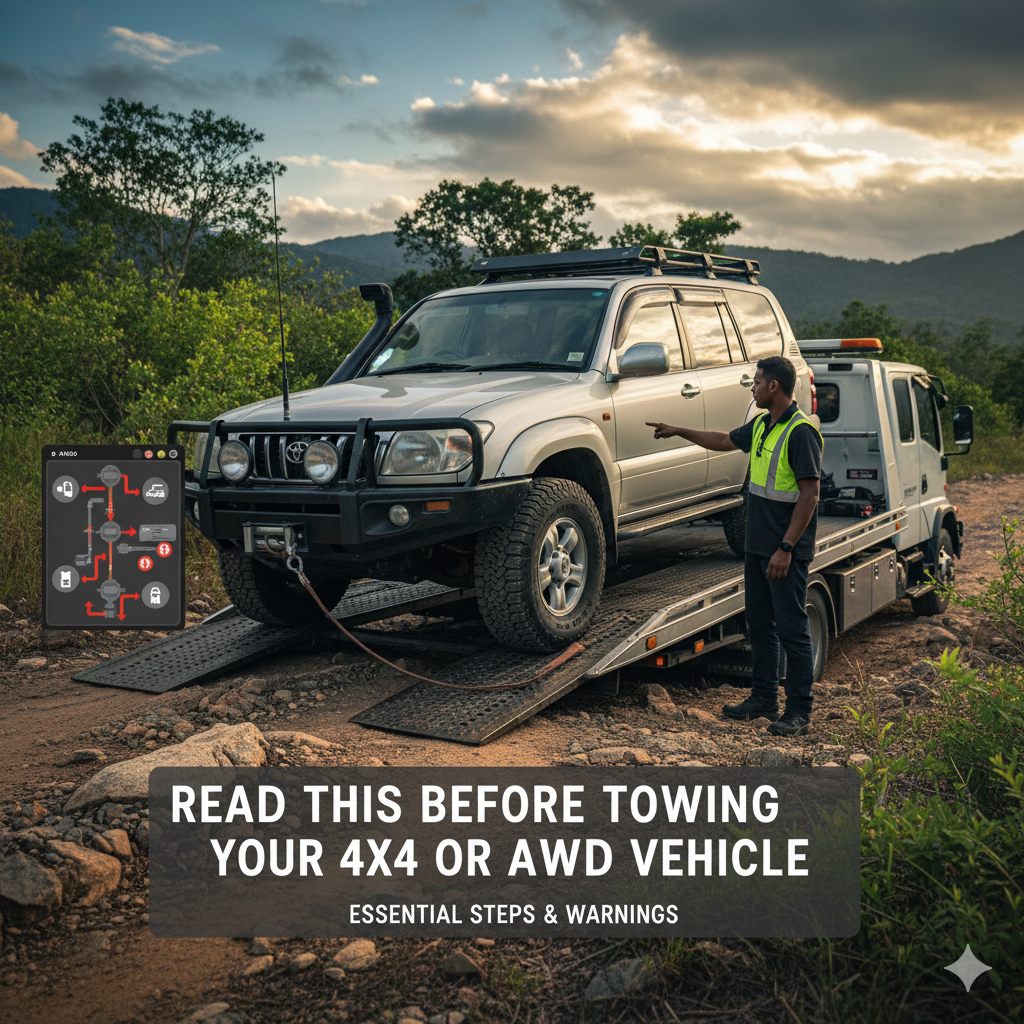
Understanding the proper methods for towing AWD vehicle systems can save thousands in repair costs and prevent dangerous roadside situations. All-wheel drive and 4X4 vehicles require special handling during towing operations, and one wrong move could damage expensive drivetrain components.
Let’s break down what every driver needs to know about safely moving these complex vehicles.
Why AWD and 4X4 Vehicles Need Special Towing Attention
All-wheel drive systems constantly distribute power between front and rear wheels through sophisticated transfer cases and differentials. When you tow with two wheels on the ground, this creates a mechanical conflict that can damage the driveshaft and transmission. The system tries to compensate for the speed difference between lifted and grounded wheels, causing internal components to overheat and fail.
Four-wheel drive vehicles face similar risks. The transfer case connects front and rear axles, and improper towing methods can cause viscous coupling damage or complete transmission failure. Moving an AWD car with only two wheels lifted can damage the transmission, leading to expensive repairs.
Here’s why this matters: Modern AWD systems cost $3,000-$8,000 to replace, while 4X4 transfer cases range from $2,500-$5,000. Prevention through proper towing techniques is far cheaper than repairs.
The Only Safe Methods for Towing AWD Vehicle Systems
Professional towing operators follow strict protocols when handling all-wheel drive vehicles. The key to safely towing an AWD vehicle is making sure that all wheels are off the ground during the tow.
Flatbed Towing: The Gold Standard
The safest way to tow an AWD vehicle is to use a flatbed tow truck. This method completely eliminates drivetrain stress by lifting the entire vehicle off the road surface. The car sits securely on the truck bed without any wheels spinning or creating mechanical tension.
Benefits of flatbed towing include:
- Zero drivetrain damage risk
- Protection from road debris
- Reduced wear on tires and suspension
- Safe transport at highway speeds
Four-Wheel Dolly Method
When flatbed trucks aren’t available, professional services use dollies under all four wheels. This approach keeps the entire drivetrain suspended while allowing secure transport. The dollies roll independently, preventing the mechanical conflicts that damage AWD systems.
Emergency Driveshaft Disconnection
You can tow an AWD car on its wheels, but to do so will require some mechanical work. You would need to disengage the driveshaft completely. This time-intensive process involves:
- Locating the rear driveshaft connection
- Removing universal joint bolts
- Securing the disconnected shaft
- Reconnecting after transport
This method works but requires mechanical knowledge and proper tools. Most drivers should avoid attempting roadside driveshaft removal due to safety concerns.
What Never to Do When Towing AWD Vehicle Systems
Certain towing methods guarantee expensive damage. AWD vehicles should never be towed with just two wheels on the ground unless dollies are used to lift the other two.
Two-Wheel Towing Risks
Standard two-wheel towing creates these problems:
- Transmission overheating from forced wheel rotation
- Transfer case damage from speed mismatches
- Differential failure from continuous stress
- Electronic system errors from wheel speed sensors
Neutral Gear Myths
Many drivers believe placing the transmission in neutral protects AWD systems during two-wheel towing. This assumption is wrong. Neutral only disconnects the engine from the transmission – the wheels remain connected to the entire drivetrain system.
Distance and Speed Limitations
Even short-distance two-wheel towing can cause damage. The drivetrain components heat up quickly when forced to operate outside normal parameters. Speed doesn’t matter – damage occurs at any velocity when wheels remain on the ground.
Different Vehicle Types Require Different Approaches
Not all AWD systems work identically. Understanding your vehicle’s specific configuration helps determine the safest towing method.
Full-Time AWD Systems
Vehicles like Subaru Outback, Audi Quattro, and many luxury SUVs use full-time all-wheel drive. These systems continuously send power to all four wheels and have the highest risk during improper towing. They require flatbed or four-wheel dolly transport without exception.
Part-Time 4WD Systems
Traditional pickup trucks and SUVs with selectable 4WD can sometimes be towed safely with two wheels down when in 2WD mode. Check your owner’s manual for specific procedures, as some manufacturers still require flatbed transport.
Electronic AWD Systems
Modern crossovers use electronic AWD that engages automatically. These systems often have more flexibility, but manufacturer guidelines vary significantly. When in doubt, choose flatbed towing.
Professional Towing Services vs DIY Attempts
Attempting to tow AWD vehicles without proper equipment creates serious risks. Professional operators have specialized tools and experience that prevent damage and ensure safety.
Professional services provide:
- Correct equipment for each vehicle type
- Insurance coverage for potential damage
- 24/7 availability for emergency situations
- Knowledge of manufacturer-specific requirements
DIY towing attempts often result in:
- Expensive drivetrain repairs
- Safety hazards on busy roads
- Insurance claim complications
- Personal injury from equipment failure
How Tow Expert Protects Your AWD Investment
When your AWD vehicle needs professional transport, choosing experienced operators makes all the difference. Tow Expert specializes in safely handling complex drivetrain systems with their Adelaide-based fleet of flatbed trucks and specialized equipment.
Their technicians understand the specific requirements for different AWD configurations and carry the proper dollies and securing equipment for each situation. Tow Expert provides reliable 24/7 car & bike towing, machinery transport, and emergency vehicle recovery services in Adelaide with rapid response times that minimize your roadside exposure.
The company’s commitment to proper procedures means your expensive AWD components receive the protection they need. Rather than taking shortcuts that risk damage, their operators follow manufacturer guidelines and industry best practices for every transport job.
Also Read:- Car Breakdown in Elizabeth, SA? Who to Call and What to
Emergency Situations and AWD Vehicle Towing
Breakdowns don’t always happen in convenient locations. When your AWD vehicle fails on highways, parking lots, or remote areas, quick decisions about towing methods become critical.
Assess the Situation Quickly
- Is the vehicle stuck or simply disabled?
- Can it roll freely in neutral?
- Are any wheels or axles damaged?
- Is professional help readily available?
Make the Right Call
Emergency situations tempt drivers to accept improper towing methods to get moving quickly. Resist this urge. A few extra minutes waiting for proper equipment can save thousands in repair costs.
Communicate Your Needs Clearly
When calling for towing assistance, specify that you have an AWD or 4X4 vehicle. Many standard tow trucks cannot safely transport these vehicles, and the operator needs advance notice to bring appropriate equipment.
Cost Considerations for AWD Vehicle Towing
Proper towing costs more than standard two-wheel methods, but the expense is minimal compared to potential repair bills. Flatbed service typically costs $20-50 more than wheel-lift towing, while AWD transmission replacement can exceed $6,000.
Budget considerations include:
- Flatbed towing: $100-200 for local transport
- Four-wheel dolly service: $80-150 local
- DIY trailer rental: $40-80 plus fuel
- Transmission replacement: $3,000-8,000
- Transfer case repair: $2,500-5,000
The math clearly favors professional towing services for protecting your investment.
Manufacturer Guidelines and Warranty Protection
Vehicle manufacturers provide specific towing instructions in owner’s manuals, and following these guidelines protects warranty coverage. Improper towing that damages drivetrain components can void expensive warranty repairs.
Check your manual for:
- Maximum towing distances if any
- Required transmission settings
- Recommended towing methods
- Warranty implications of improper transport
Keep documentation of professional towing services to support warranty claims if issues develop later.
Prevention and Preparation Tips
Smart AWD owners prepare for towing situations before they occur. Keep these items in your vehicle:
- Emergency contact numbers for reputable towing services
- Copy of your owner’s manual towing section
- Vehicle registration and insurance information
- Basic tool kit for minor issues
Regular maintenance also reduces towing needs. Check fluid levels, tire condition, and battery status monthly to prevent roadside failures.
Also Read:- got a breakdown in a regional county SA?
Take Action to Protect Your Investment
Your AWD or 4X4 vehicle represents a significant investment that deserves proper protection during transport. Don’t risk expensive repairs by accepting improper towing methods or attempting DIY solutions that exceed your skill level.
Contact Tow Expert today to discuss your AWD towing needs and ensure your vehicle receives the professional care it requires. Their experienced team understands the complexities of modern drivetrain systems and has the equipment to transport your vehicle safely, protecting both your investment and your peace of mind.
Frequently Asked Questions
Can I tow my AWD vehicle behind an RV?
No, AWD vehicles cannot be flat-towed behind recreational vehicles. The drivetrain will suffer damage from continuous wheel rotation. Use a flatbed trailer or dolly system instead.
How far can I tow an AWD vehicle with two wheels down?
Zero distance is safe with two wheels down. Even short movements can cause transmission damage. Always use flatbed or four-wheel dolly methods regardless of distance.
Does putting the transmission in neutral protect my AWD system?
No, neutral gear only disconnects the engine from transmission. The wheels remain connected to differentials and transfer cases, which will suffer damage during two-wheel towing.
What’s the difference between AWD and 4WD towing requirements?
Both systems require similar care, but part-time 4WD vehicles in 2WD mode may allow limited two-wheel towing. Check your owner’s manual for specific guidelines.
How much extra does proper AWD towing cost?
Flatbed service typically costs $20-50 more than standard towing methods. This small expense prevents thousands in potential drivetrain repairs from improper towing techniques.