Introduction
When it comes to towing trailers, caravans, boats, or other vehicles, choosing the right equipment is essential for ensuring safety, convenience, and efficiency. Two common types of towing mechanisms are the tow hitch and the tow bar. Both of these devices are widely used to connect a towing vehicle to a trailer or another vehicle, but their designs, functionality, and applications differ significantly.
Understanding the difference between a tow hitch and a tow bar is vital when making an informed decision. Whether you’re an avid traveler planning to haul a caravan or someone in need of towing a boat, choosing the right system can make all the difference in how smoothly the towing process goes.
In this article, we’ll break down the characteristics of each towing system, their advantages, disadvantages, and provide guidance on which one suits your vehicle and towing needs. We’ll also touch on common questions and give you practical advice for ensuring a safe and successful towing experience. Finally, we’ll introduce TowExpert, a trusted towing service company in Alidade, Australia, to help you make the most of your towing experience.
What Is a Tow Hitch?
A tow hitch, also known as a trailer hitch, is a device that attaches to the rear frame of a vehicle, designed to tow a trailer or other towed equipment. Tow hitches are typically installed on vehicles such as trucks, SUVs, and some cars, enabling them to safely haul various types of trailers, boats, campers, and more.
Tow hitches generally consist of several key components:
- Receiver Tube: This is the central part where the tow ball or other towing accessories are inserted.
- Tow Ball: The ball, which attaches to the trailer’s coupler, is used for towing the load.
- Mounting Brackets: These brackets secure the hitch to the vehicle’s frame.
- Safety Chain Attachments: These are used to secure the trailer to the vehicle in case the hitch detaches during towing.
There are several types of tow hitches, including Class I, Class II, Class III, Class IV, and Class V hitches, which vary in strength and are designed for different towing capacities. The class of hitch you choose depends on the weight and type of load you plan to tow.
Advantages of Tow Hitches
- Versatility: Tow hitches can be used to haul a wide range of trailers, including utility, camping, and boat trailers.
- Enhanced Safety: When properly installed and maintained, a tow hitch provides excellent stability while towing.
- Variety of Accessories: Tow hitches offer the flexibility of additional accessories like weight distribution systems, bike racks, and cargo carriers.
- Ease of Use: Installing a tow hitch is relatively straightforward, and many vehicles are pre-equipped with the necessary mounting points.
Disadvantages of Tow Hitches
- Limited to Specific Vehicles: Not all vehicles can accommodate a tow hitch, and installation may require professional assistance.
- Towing Capacity: Tow hitches are designed to work within specific weight limits, and exceeding these limits can result in damage or dangerous towing conditions.
- Aesthetic Impact: Some vehicle owners dislike the look of a tow hitch, especially when not in use.
What Is a Tow Bar?
A tow bar, on the other hand, is a component that allows one vehicle to tow another vehicle, typically a smaller car, behind an RV, motorhome, or other vehicle. Tow bars are commonly used in recreational towing situations, where a smaller vehicle is towed behind a larger vehicle, like when a motorhome tows a car.
Tow bars are generally made from heavy-duty materials and consist of several parts:
- Tow Bar Arm: This is the long arm that attaches to the towing vehicle.
- Coupler: The coupler connects the tow bar arm to the towed vehicle.
- Safety Chains: Like the tow hitch, tow bars often use safety chains to add an extra layer of security.
- Pin and Lock Mechanism: This ensures the tow bar is securely attached to both vehicles.
There are two main types of tow bars: fixed tow bars and removable tow bars. Fixed tow bars remain in place permanently, while removable ones can be detached when not in use, preserving the appearance of the vehicle.
Advantages of Tow Bars
- Simple Design: Tow bars are relatively simple to use and install, making them a popular choice for recreational towing.
- Compatibility: Tow bars are often compatible with a wide range of vehicles, especially when towing small cars.
- Convenience: Removable tow bars can be detached when not in use, making them more convenient for those who don’t need to tow all the time.
- Durability: Tow bars are designed for long-term use and are often more robust than certain types of tow hitches.
Disadvantages of Tow Bars
- Limited Towing Applications: Tow bars are primarily designed for towing vehicles and may not be as versatile as tow hitches for other types of trailers.
- Complex Setup: Setting up a tow bar can be a bit more complicated compared to a tow hitch, especially for those who are new to towing.
- Wear and Tear: Frequent use can cause wear on the tow bar components, requiring maintenance or replacement over time.
Key Differences Between Tow Hitches and Tow Bars
While both tow hitches and tow bars serve the same fundamental purpose—connecting a towing vehicle to a towed load—they are designed for different types of towing applications.
Here’s a breakdown of the key differences between the two:
- Usage:
- Tow Hitches are most commonly used for towing trailers, boats, caravans, and other equipment.
- Tow Bars are mainly used for towing vehicles, particularly in recreational settings where a smaller vehicle is towed behind a larger one.
- Mounting:
- Tow Hitches are typically mounted on the rear frame of the towing vehicle, often on trucks, SUVs, or sedans.
- Tow Bars attach to both the towing vehicle and the towed vehicle, and they often require a mounting bracket on the towed car.
- Towing Capacity:
- Tow Hitches generally offer a higher towing capacity than tow bars, making them suitable for larger loads such as boats, caravans, and large trailers.
- Tow Bars are designed for towing smaller vehicles or light-duty towing, and their capacity is usually limited.
- Flexibility:
- Tow Hitches can accommodate a variety of trailers and equipment, thanks to the variety of accessories available, such as cargo carriers and bike racks.
- Tow Bars are more specialized and designed primarily for towing vehicles.
- Setup and Removal:
- Tow Hitches may be left on the vehicle at all times, although some people prefer to remove them when not in use for aesthetic reasons.
- Tow Bars often have a removable feature, allowing the bar to be detached from the vehicle when not towing.
Choosing the Right Towing Equipment
Selecting the right towing system for your needs depends on the type of vehicle you drive, what you plan to tow, and how frequently you need to tow. Here are some considerations to help guide your decision:
- Vehicle Type: Consider the type of vehicle you own. If you have a large truck or SUV, a tow hitch is likely the best option. For smaller vehicles or recreational towing, a tow bar might be the ideal choice.
- Towing Capacity: Think about the weight of the load you plan to tow. Tow hitches generally support higher towing capacities than tow bars.
- Frequency of Use: If you need to tow frequently, a tow hitch may offer better convenience, especially with the ability to use various accessories. For occasional towing, a tow bar might suffice.
- Storage and Aesthetics: If you don’t want a permanent towing attachment visible, a removable tow bar could be a better option. On the other hand, tow hitches may need to stay on the vehicle permanently.
- Cost and Installation: Both towing systems vary in price and installation cost. Tow bars might have a lower initial cost but could require more maintenance, while tow hitches may have higher upfront costs but offer more durability and versatility.
Maintenance and Safety Considerations for Tow Hitches
Proper maintenance of your tow hitch is crucial to ensuring its long-term functionality and safety. A tow hitch that is not properly maintained can compromise your vehicle’s ability to tow heavy loads and even put your safety at risk. Regular checks for wear and tear, such as rust, cracks, or loose connections, should be performed to guarantee the tow hitch remains in excellent condition. One key element of maintenance is ensuring the hitch’s mounting bolts are secure, as vibrations during towing can cause them to loosen over time.
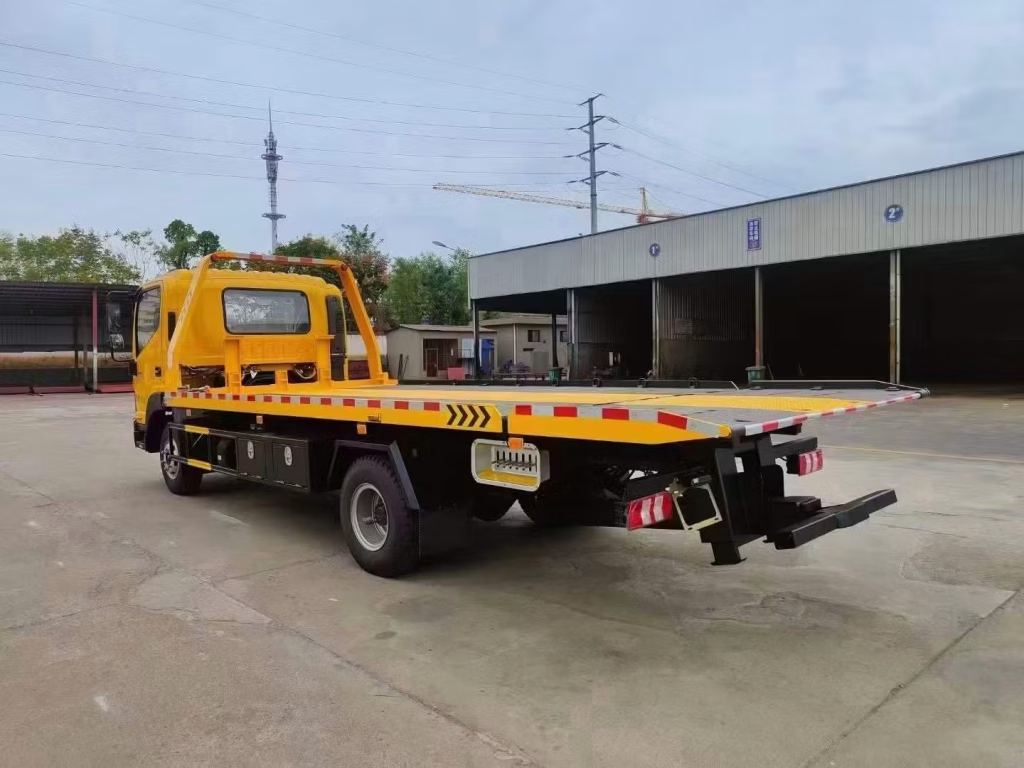
Additionally, the safety chains that accompany a tow hitch must be regularly inspected for damage or wear. These chains are designed to secure the trailer in case the hitch fails, preventing a runaway trailer. Over time, safety chains can corrode or stretch, which reduces their effectiveness. When towing, always ensure the chains are properly secured, forming a criss-cross pattern under the tow bar to help stabilize the trailer. Checking the hitch ball for any signs of damage or excessive wear is also important, as an uneven or damaged ball can affect the smoothness and safety of the towing experience.
Tow Bar Maintenance and Performance Tips
Although tow bars are designed to be durable, regular inspection is key to maintaining their reliability. Tow bars, like any towing system, are subjected to considerable strain during use, especially when towing heavy loads over long distances. It is important to ensure that the tow bar arm, coupler, and pins are all in proper working condition. Inspecting the coupler for wear or damage is particularly important, as this is the part that holds the towed vehicle securely in place.
Additionally, ensuring that the safety chains on a tow bar are properly attached is essential for preventing accidental detachments. The safety chains should be inspected for rust or other signs of damage, and any worn chains should be replaced immediately to avoid potential accidents. If you are using a removable tow bar, make sure that the locking mechanism is functioning correctly and that the tow bar is securely attached to both the towing and towed vehicles. Neglecting these checks can lead to unsafe towing conditions, especially if the tow bar becomes disconnected during travel.
When to Choose a Tow Hitch Over a Tow Bar
Choosing a tow hitch over a tow bar depends largely on the type of towing you plan to do. If you are looking to haul large trailers, boats, or caravans, a tow hitch is usually the better option. Tow hitches provide more robust support for heavier loads and are specifically designed to handle the dynamic forces created when towing large and bulky items. Additionally, tow hitches offer more flexibility when it comes to the types of accessories you can use, such as weight distribution systems, which can help distribute the load more evenly across the towing vehicle for improved stability.
Moreover, tow hitches offer a more permanent solution, allowing you to leave the hitch installed on your vehicle even when not in use. This can be convenient for people who tow frequently, such as RV owners or boaters. Tow hitches are particularly advantageous when you need to connect to different types of trailers or equipment on a regular basis. If your primary concern is maximizing towing capacity and versatility, a tow hitch will likely be the more practical and reliable option in the long run.
When to Choose a Tow Bar Over a Tow Hitch
On the other hand, a tow bar might be the better choice if you frequently need to tow a smaller vehicle behind a larger one, such as a motorhome towing a car. Tow bars are ideal for light-duty towing and are designed to tow vehicles efficiently without putting undue strain on the towing vehicle. If you are a full-time RVer or frequently engage in road trips where you need to bring a smaller car for convenience, a tow bar provides a more flexible solution. Tow bars are especially popular among RV enthusiasts who need to bring a car with them on long journeys.
For those who are looking for a towing system that is simple, effective, and easy to remove when not in use, a tow bar can be an excellent choice. Unlike tow hitches, which can remain mounted on the vehicle at all times, a removable tow bar allows for greater aesthetic flexibility. When detached, the vehicle maintains its original appearance, which is important for those who do not want to compromise the look of their vehicle when not towing.
TowExpert: Expert Towing Solutions in Alidade, Australia
When it comes to towing in Alidade, Australia, you can rely on TowExpert to provide professional advice, quality installation, and expert towing services. Whether you need a tow hitch or a tow bar, our experienced team can help you select the right solution based on your vehicle type and towing needs. We understand that the right towing system can make a significant difference in how smoothly your towing experience goes, and we are here to guide you through every step of the process.
At TowExpert, we specialize in installing, maintaining, and repairing both tow hitches and tow bars for a wide range of vehicles, from cars to trucks and RVs. Our service doesn’t just stop at installation; we also provide routine maintenance and safety checks to ensure that your towing system remains in excellent working condition for years to come. Contact TowExpert today to schedule your consultation or installation and take advantage of our expert towing services in Alidade, Australia.