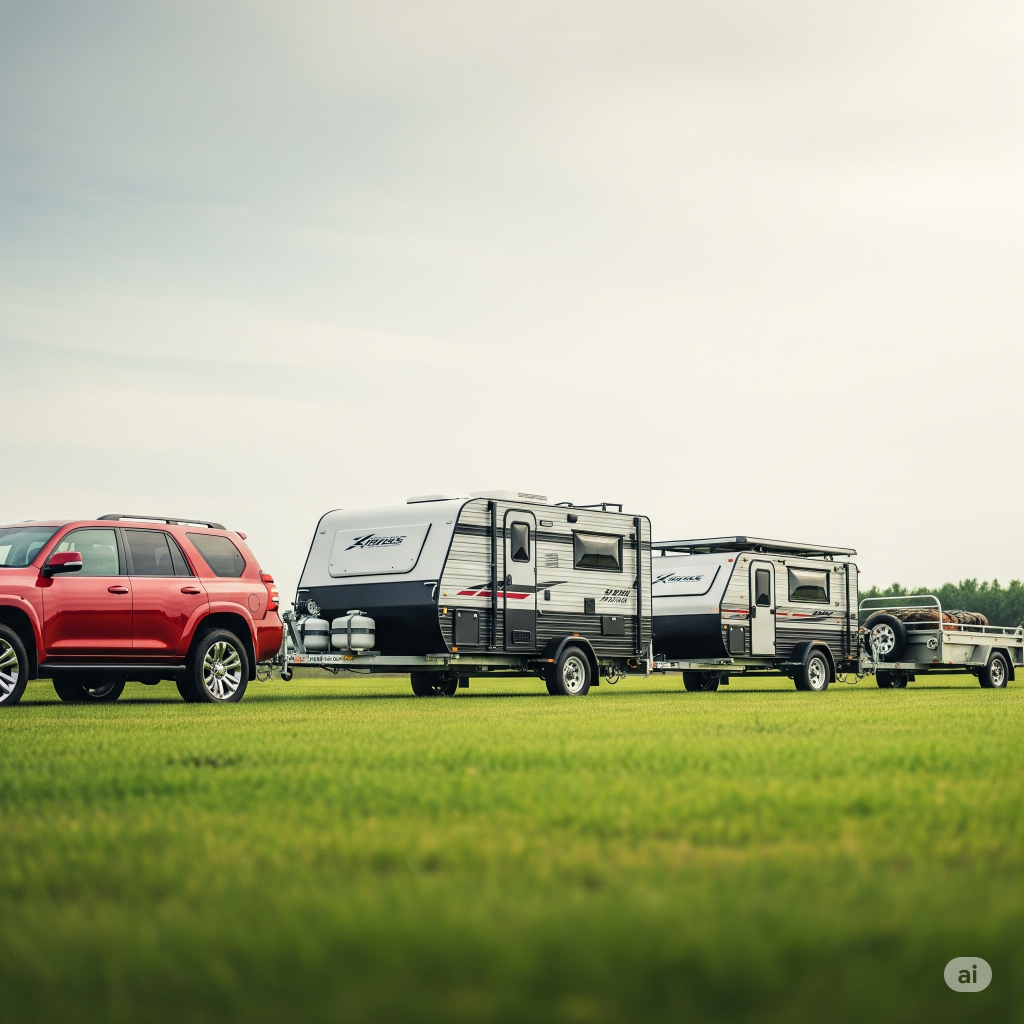
Picture this: you’re planning the ultimate camping adventure and wondering if you can hook up both your boat trailer and caravan behind your 4WD for the perfect getaway. Or perhaps you’re moving house and considering whether pulling multiple trailers might save you an extra trip. The short answer might surprise you, but the complete picture involves crucial safety considerations and legal requirements that every Australian driver needs to understand.
Are you allowed to drive a car towing more than one trailer? This question has become increasingly common as more Australians embrace caravanning, boating, and recreational vehicle ownership. Understanding these regulations isn’t just about avoiding hefty fines – it’s about keeping yourself, your passengers, and other road users safe.
The Legal Reality: One Trailer Rule Across Australia
The answer is crystal clear across every Australian state and territory: you cannot legally tow more than one trailer behind a standard passenger vehicle. This fundamental rule applies whether you’re driving in bustling Sydney, remote Western Australia, or anywhere in between.
In every state and territory in Australia, it is illegal to tow more than one trailer at a time behind a passenger vehicle. Queensland regulations specifically state “You may tow only 1 trailer (caravan, box or boat) at a time”, while South Australian law clearly mandates “A light motor vehicle may tow no more than one vehicle”.
This prohibition exists regardless of your vehicle’s towing capacity or your driving experience. Even if your hefty 4WD could theoretically handle the weight, and even if you consider yourself an expert at reversing with trailers, the law remains absolute for standard car licences.
Why This Rule Exists: Safety First
The restriction on multiple trailer towing isn’t arbitrary bureaucracy – it stems from serious safety concerns. When you’re towing multiple trailers, several critical factors come into play:
Increased stopping distances become dramatically longer with additional weight and momentum. Your vehicle’s braking system must work significantly harder to bring the entire combination to a stop, especially in emergency situations.
Vehicle stability becomes increasingly compromised with each additional trailer. The risk of jackknifing, trailer sway, and loss of control multiplies exponentially when managing multiple articulation points.
Manoeuvring difficulties make simple tasks like lane changes, roundabouts, and parking incredibly challenging. The longer your vehicle combination, the wider turning radius required and the more complex your spatial awareness needs become.
Also Read:-Ford Tyre tray broken ball joint, nedd a tow?
State-by-State Breakdown of Towing Regulations
While the one-trailer rule remains consistent, other towing regulations vary slightly between states. Understanding these nuances helps ensure you’re fully compliant wherever your travels take you.
New South Wales Towing Laws
NSW specifically prohibits “towing a caravan or multiple trailers at once” and maintains strict overall length limits. The combined vehicle and trailer length cannot exceed 19 metres, with maximum width restricted to 2.5 metres.
NSW also has specific licence restrictions. P1 licence holders can only tow small trailers with up to 250kg unloaded weight, while learner drivers are prohibited from towing entirely.
Queensland Regulations
Queensland echoes the national standard with clear single-trailer restrictions. The state mandates that towbars and couplings must not cover the towing vehicle’s number plate or rear lights when disconnected, ensuring proper visibility and identification at all times.
South Australia’s Approach
South Australian regulations emphasise that trailers must meet all mass, lighting, and braking requirements before being deemed roadworthy. The state maintains the 19-metre overall length limit and requires warning signals for loads projecting more than 1.2 metres.
Victoria and Other States
Victoria, Tasmania, Western Australia, Northern Territory, and ACT all maintain similar restrictions. The Australian Capital Territory limits trailer length to 12 metres with 2.5-metre width restrictions, representing some of the most restrictive dimensional requirements in the country.
Also Read:- Max Speed for Towing a Caravan in Australia
What About Commercial and Heavy Vehicle Operations?
The single-trailer restriction applies specifically to standard car licences and light vehicles. Commercial operations with appropriate heavy vehicle licences can legally operate B-doubles, road trains, and other multi-trailer combinations – but these require specialised training, licensing, and route approvals.
Multi-combination vehicles like B-doubles and road trains operate under entirely different regulatory frameworks, managed by the National Heavy Vehicle Regulator (NHVR) rather than standard state licensing authorities.
These commercial operations require:
- Heavy Combination (HC) or Multi Combination (MC) licence endorsements
- Route-specific permits and approvals
- Specialised vehicle configurations meeting stringent safety standards
- Regular compliance audits and maintenance schedules
Safe Towing Practices for Single Trailer Operations
Since you’re limited to one trailer, maximising safety and efficiency becomes crucial. Are you allowed to drive a car towing more than one trailer? No, but you can certainly optimise your single-trailer setup for maximum effectiveness.
Essential Safety Equipment
Proper safety equipment includes towing mirrors for trailers wider than your vehicle, and safety chains – one chain required for trailers up to 2,500kg GTM, with two chains needed for heavier trailers between 2,501kg and 3,500kg.
Electronic breakaway systems with backup batteries are mandatory for any trailer over 2,000kg across all Australian states, with NSW requiring in-cabin battery monitoring capability.
Weight Distribution and Loading
Understanding your vehicle’s specifications is crucial. Towing capacity decreases proportionally as your vehicle’s weight increases with tools, spare parts, and cargo. A vehicle rated to tow 2,500kg at kerb weight might only safely tow 1,500kg when fully loaded to its Gross Vehicle Mass (GVM).
Proper weight distribution involves:
- Positioning 10-15% of trailer weight over the towball
- Securing all loads to prevent shifting during transit
- Regularly checking tyre pressures on both vehicle and trailer
- Understanding the relationship between payload and towing capacity
Speed Limits and Driving Considerations
For vehicle and trailer combinations under 4.5 tonnes Gross Combined Mass (GCM), standard posted speed limits apply, except in Western Australia where a 100km/h limit applies when towing unless manufacturers specify lower limits.
When towing, maintain increased following distances – at least 60 metres behind heavy vehicles or other towing combinations on roads without street lights, unless overtaking. This extra space provides crucial reaction time for the additional weight and momentum you’re managing.
Night Driving and Visibility
Towing significantly affects your vehicle’s lighting profile and visibility. Ensure your trailer’s lights function correctly, including brake lights, indicators, and reflectors. Many modern vehicles feature trailer light monitoring systems that alert you to blown bulbs or connection issues.
Alternative Solutions for Multiple Items
Since are you allowed to drive a car towing more than one trailer restrictions prevent multi-trailer combinations, consider these practical alternatives:
Larger single trailers can accommodate multiple items efficiently. A properly sized enclosed trailer might carry both your motorbike and camping gear, or a dual-axle trailer could handle both boat and jet ski simultaneously.
Multiple trips might seem inconvenient but ensure legal compliance and safety. Plan your journeys strategically, considering fuel costs and time constraints against the risks of illegal towing practices.
Professional transport services like those offered by TOW EXPERT provide specialised solutions for complex moving or transport requirements. Their experienced operators can handle multiple vehicles safely and legally using appropriate commercial equipment.
Penalties and Enforcement
Violating Australia’s single-trailer towing laws carries significant penalties, varying by state but typically including substantial fines and demerit points. More seriously, insurance coverage might be voided if accidents occur while illegally towing multiple trailers.
Police and transport inspectors actively monitor towing compliance, particularly during peak holiday periods when recreational vehicle usage increases. Roadside inspections can result in immediate prohibition notices, requiring you to arrange alternative transport for excess trailers before continuing your journey.
When Professional Towing Services Make Sense
Complex transport requirements often exceed what individual drivers can legally or safely accomplish. Professional towing services offer specialised equipment and expertise for challenging situations.
TOW EXPERT provides comprehensive towing solutions across Adelaide, including:
- Tilt tray services for secure vehicle transport
- Caravan and recreational vehicle towing with appropriate equipment
- Emergency recovery services available 24/7
- Machinery and heavy equipment transport using specialised low-bed trailers
Their experienced operators understand legal requirements and possess the proper licensing and equipment for complex towing operations that exceed standard passenger vehicle capabilities.
Future Considerations and Technology
Automotive technology continues evolving, with advanced trailer stability systems, automated braking coordination, and intelligent towing assistance becoming increasingly common. However, these technological advances don’t change fundamental legal restrictions on multiple trailer combinations for standard licence holders.
Electric vehicles present unique towing considerations, with reduced range when towing and specific charging infrastructure requirements during long journeys. Understanding your electric vehicle’s towing capacity and planning charging stops becomes crucial for extended trips.
Making Informed Decisions
Understanding that you cannot legally tow multiple trailers with a standard car licence helps you plan appropriately for recreational activities, moving house, or business operations. This knowledge prevents costly mistakes and ensures road safety for everyone.
Consider your actual needs carefully. Often, perceived requirements for multiple trailers stem from poor planning or inadequate equipment selection. A properly chosen single trailer frequently accommodates your requirements more effectively than multiple smaller units.
Conclusion
The question “Are you allowed to drive a car towing more than one trailer?” has a definitive answer across Australia: absolutely not with a standard car licence. This restriction exists for compelling safety reasons and applies uniformly across all states and territories.
Understanding these regulations helps you make informed decisions about recreational vehicle purchases, trip planning, and transport requirements. While the single-trailer rule might initially seem limiting, it encourages safer practices and proper equipment selection.
For complex transport needs exceeding single-trailer capabilities, professional services like TOW EXPERT offer experienced solutions with appropriate equipment and licensing. Their specialised knowledge ensures legal compliance while maintaining the highest safety standards.
Planning your next adventure or transport requirements? Remember the golden rule: one trailer maximum, properly equipped, and safely operated. Your journey will be safer, legal, and ultimately more enjoyable when you understand and respect Australia’s towing regulations.
For professional towing services that exceed your single-trailer capabilities, contact TOW EXPERT on 045-6262-486 or visit their website. Their experienced team provides safe, reliable transport solutions for vehicles, caravans, machinery, and complex towing requirements across Adelaide and surrounding areas.
Frequently Asked Questions
Q: Can I tow two small trailers if the combined weight is within my vehicle’s towing capacity?
No, Australian law prohibits towing more than one trailer regardless of total weight. The restriction applies to the number of trailers, not their combined mass or your vehicle’s theoretical capacity.
Q: What happens if police catch me towing multiple trailers?
You’ll face substantial fines, demerit points, and immediate prohibition from continuing until excess trailers are removed. Insurance coverage may also be voided if accidents occur during illegal multi-trailer operations.
Q: Are there any exceptions for emergency situations or short distances?
No exceptions exist for emergency situations or short distances. The single-trailer rule applies universally across all Australian roads, regardless of circumstances, distance, or perceived necessity.
Q: Can I get a special permit to tow multiple trailers with my car licence?
Standard car licences cannot obtain permits for multiple trailer towing. Multi-trailer operations require heavy vehicle licences (HC or MC endorsements) and operate under commercial regulations.
Q: What’s the maximum length allowed for a single trailer behind my car?
Maximum trailer length varies by state, but combined vehicle and trailer length typically cannot exceed 19 metres, with some states like ACT limiting individual trailers to 12 metres maximum length.