Whether you’re towing a caravan across the Nullarbor, hauling a boat to the Coral Sea, or carting gear for a weekend in the Snowy Mountains, a reliable trailer tongue jack is the unsung hero of your setup. It lifts, levels, and stabilises your trailer, making hitching and unhitching a breeze. But with so many options out there, how do you choose the right one?
At Tow Expert, we’ve been helping Aussie tow enthusiasts gear up for years. Based in Australia, we know the unique demands of our roads—from rugged Outback tracks to coastal highways. In this ultimate guide, we’ll break down the key features to look for when buying a trailer tongue jack in 2025, ensuring you pick a model that’s tough, practical, and perfect for your adventures. Let’s dive in!
Why a Trailer Tongue Jack Matters for Aussie Towing
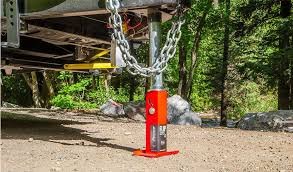
Before we get into the nitty-gritty, let’s clarify what a trailer tongue jack does. Mounted on the trailer’s tongue (the part that connects to your vehicle’s hitch), it raises and lowers the trailer to align with your tow ball. It also levels the trailer when parked and stabilises it during loading. Without a solid jack, you’re stuck wrestling with a manual crank—or worse, a wobbly trailer.
For Australian families and adventurers, a quality jack is non-negotiable. Our diverse terrain demands gear that can handle everything from sandy beaches to rocky inclines. At Tow Expert, we’ve seen how the right jack turns a stressful setup into a smooth start. So, what should you look for? Let’s explore the must-have features.
Essential Features to Look For in a Trailer Tongue Jack
Choosing a trailer tongue jack isn’t just about picking the cheapest option at the hardware store. It’s about matching features to your towing needs. Here’s what to prioritise:
1. Weight Capacity: Match Your Trailer’s Load
The first rule of thumb: your jack’s capacity must exceed your trailer’s tongue weight—the downward force on the hitch. Typically, this is 10-15% of your trailer’s fully loaded weight. For example, a 3,500 kg caravan might have a tongue weight of 350-525 kg.
- Light Duty (Up to 500 kg): Ideal for small camper trailers or boat trailers.
- Medium Duty (500-1,000 kg): Suits mid-sized caravans or utility trailers.
- Heavy Duty (1,000+ kg): Perfect for large caravans or heavy equipment haulers.
Pro Tip: Overspec your jack slightly. A 1,000 kg jack for a 600 kg tongue weight works less hard and lasts longer. Check out heavy-duty options at Tow Expert for peace of mind.
Real-World Example: Towing a 4WD camper to Kakadu? With gear, water, and supplies, your tongue weight might creep up. A 1,200 kg jack ensures you’re covered.
2. Manual vs. Electric: Effort or Ease?
Trailer tongue jacks come in two flavours: manual and electric. Your choice depends on how much elbow grease you’re willing to spare.
- Manual Jacks: Hand-cranked and budget-friendly. Great for light trailers or if you enjoy the workout. Look for smooth gears and ergonomic handles.
- Electric Jacks: Push-button convenience powered by your trailer’s 12V battery. Ideal for heavy loads or frequent use—no cranking required.
Why It Matters: On a scorching Queensland day, cranking a manual jack under the sun is no picnic. Electric models, like those at Tow Expert, save time and sweat.
Bonus Feature: Many electric jacks include a manual override crank—handy if your battery dies in the bush.
3. Lift Height and Travel Range: Clear the Hitch
A jack’s lift height (how far it extends) and travel range (total movement) determine if it can lift your trailer high enough to clear your tow vehicle’s hitch ball.
- Standard Range (20-30 cm): Fine for most SUVs and utes.
- Extended Range (40+ cm): Essential for lifted 4WDs or uneven terrain.
Aussie Angle: Parking on a slope in the Dandenongs? An extended-range jack ensures you can level your trailer without scraping the hitch. Measure from the ground to your coupler when level to find your ideal range.
4. Build Quality: Tough Enough for Aussie Conditions
Australia’s climate—think salty coastal air, dusty plains, and torrential rains—demands durability. Here’s what to check:
- Material: Steel is strong but prone to rust; opt for galvanised or powder-coated finishes. Aluminium is lightweight and corrosion-resistant, perfect for beach trips.
- Weatherproofing: Electric jacks need sealed motors to keep out water and dust.
- Grease Fittings: A jack with zerk fittings lets you lubricate gears, extending its life.
Why It Matters: A rusty jack fails when you least expect it—like halfway through a Nullarbor crossing. Browse Tow Expert for corrosion-resistant models built for our harsh landscapes.
5. Mounting Style: Fit Your Trailer Tongue
Jacks come in various mounting designs—ensure compatibility with your trailer’s tongue shape:
- A-Frame Mount: Bolts to triangular frames, common on caravans.
- Swivel Mount: Pivots up for travel, ideal for boat trailers.
- Pipe Mount: Fits round tongues, often on utility trailers.
Pro Tip: Check your tongue’s dimensions (e.g., 50 mm round or 75×50 mm A-frame). Tow Expert offers jacks for every setup, plus installation help if needed.
Scenario: Towing a jet ski to the Gold Coast? A swivel-mount jack tucks away neatly, boosting ground clearance on boat ramps.
6. Footplate or Wheel: Stability vs. Mobility
The base of your jack affects how it performs:
- Footplate: Wide and stable, perfect for soft ground like campsites. Look for adjustable drop-legs for extra height.
- Wheel: Rolls easily, great for repositioning trailers in tight spaces. Dual wheels add stability for heavier loads.
Aussie Insight: On sandy Fraser Island tracks, a broad footplate prevents sinking. For garage storage, a wheeled jack is a winner. Explore both at Tow Expert.
7. Additional Features: The Extras That Count
Modern jacks come with bells and whistles that elevate your towing game:
- LED Lights: Built-in lights on electric jacks illuminate the hitch area—crucial for late-night setups in the Grampians.
- Level Indicator: Some jacks have bubble levels for quick levelling.
- Remote Control: Rare but handy—operate your jack from a distance.
- Speed Settings: Dual-speed electric jacks offer fast lifting with precision control.
Why It Matters: Fumbling in the dark at a bush campsite? LED lights turn frustration into focus. Find feature-packed models at Tow Expert.
Top Trailer Tongue Jacks to Consider in 2025
To bring these features to life, here are five standout jacks available at Tow Expert, each excelling in different scenarios:
1. Lippert Power Tongue Jack – The Electric All-Star
Best For: Effortless hitching on big caravans
Price Range: $$$
Capacity: 1,587 kg (3,500 lbs)
Key Features: Electric operation, LED lights, 45 cm travel
This beast makes lifting heavy trailers a one-button job. Its weatherproof casing and manual override crank suit Australia’s wild weather.
Scenario: Setting up at Lake Eildon? The LED lights guide you in the dusk, and the high capacity handles your loaded caravan.
2. Rhino-Rack Swivel Jack – The Boat Trailer Buddy
Best For: Marine towing with mobility
Price Range: $$
Capacity: 680 kg
Key Features: Swivel mount, single wheel, galvanised steel
Lightweight yet tough, this jack swings up for towing and rolls smoothly on ramps—ideal for coastal adventures.
Scenario: Launching at Port Phillip Bay? The galvanised finish resists saltwater corrosion, and the wheel makes positioning a snap.
3. Curt A-Frame Jack – The Manual Workhorse
Best For: Budget-conscious campers
Price Range: $
Capacity: 907 kg (2,000 lbs)
Key Features: Top-wind crank, footplate, powder-coated
Simple, sturdy, and affordable, this manual jack is built to last with minimal fuss.
Scenario: A weekend in the Barossa? Its footplate keeps your trailer steady on vineyard soil, no power needed.
4. Trailer Valet JX 2K – The Hybrid Hero
Best For: Versatility lovers
Price Range: $$$
Capacity: 907 kg (2,000 lbs static)
Key Features: Drill-powered or manual, compact design
Use a cordless drill for electric ease or crank by hand—this jack adapts to your setup.
Scenario: Off-grid in the Flinders Ranges? No battery? No worries—just grab your drill from the toolbox.
5. Bulldog Heavy Duty Jack – The Big Rig Boss
Best For: Oversized trailers
Price Range: $$$$
Capacity: 2,268 kg (5,000 lbs)
Key Features: Drop-leg footplate, side-wind, zinc-plated
For serious haulers, this jack’s massive capacity and adjustable leg tackle the toughest loads.
Scenario: Hauling machinery to a Pilbara site? Its stability and strength won’t flinch under pressure.
How to Choose the Perfect Trailer Tongue Jack
Ready to buy? Follow this step-by-step checklist:
- Weigh Your Trailer: Calculate your fully loaded tongue weight (scale it at a weighbridge if unsure).
- Assess Your Vehicle: Measure hitch height and check battery access for electric jacks.
- Match the Mount: Confirm A-frame, swivel, or pipe compatibility.
- Pick Your Power: Manual for simplicity, electric for ease—factor in your towing frequency.
- Consider Conditions: Prioritise corrosion resistance and stability for your typical routes.
Need help? Tow Expert offers expert advice and fitting services Australia-wide.
Pro Tips for Using Your Trailer Tongue Jack
Maximise your jack’s lifespan and performance with these insider tips from Tow Expert:
- Lubricate Regularly: Grease moving parts every six months to prevent wear.
- Store Smart: Retract fully and cover electric jacks when not in use to shield from rain and UV.
- Level First: Use blocks under the footplate on uneven ground for stability.
- Check Power: For electric jacks, ensure your battery’s charged—carry a portable charger for remote trips.
- Inspect Before Travel: Look for cracks, rust, or loose bolts—safety first!
Why Shop with Tow Expert?
At Tow Expert, we’re more than just a store—we’re your towing partners. Here’s what sets us apart:
- Aussie Know-How: We understand local towing challenges, from red dust to salty air.
- Premium Selection: Top brands like Lippert, Rhino-Rack, and Bulldog, all in stock.
- Fast Delivery: Get your jack shipped anywhere in Australia, quick-smart.
- Support Team: Questions? Our experts are a call away.
Aussie Towing Adventures to Test Your Jack
Got your new jack? Hit the road with these iconic destinations:
- Gibb River Road, WA: Rugged terrain tests your jack’s durability.
- Tasman Peninsula, TAS: Uneven campsites need a stable footplate.
- Cairns to Cape York, QLD: Long hauls demand electric ease.
Final Thoughts: Tow Smarter with the Right Jack
A trailer tongue jack isn’t just a tool—it’s your gateway to hassle-free towing. From weight capacity to weatherproofing, the features you choose shape your journey. Whether you’re a weekend warrior or a full-time nomad, Tow Expert has the perfect jack to match your rig and your dreams.
Browse our range today at Tow Expert and gear up for 2025’s adventures. Got a question? Contact us—we’re here to help you tow like a pro!
Frequently Asked Questions (FAQs)
1. How do I know my trailer’s tongue weight for a jack?
Weigh your loaded trailer at a weighbridge—tongue weight is 10-15% of the total. Pick a jack exceeding this, like a 1,000 kg model for a 600 kg load. Shop options at Tow Expert.
2. Are electric tongue jacks worth the extra cost?
Yes, for heavy trailers or frequent towing. They save effort and time, especially in Australia’s heat. Models like the Lippert Power Jack at Tow Expert offer push-button ease with manual backup.
3. Can a trailer tongue jack rust in coastal areas?
Steel jacks can rust without protection. Choose galvanised or powder-coated models, like the Rhino-Rack Swivel Jack. Aluminium options resist corrosion too. Find durable jacks at Tow Expert for salty Aussie conditions.
4. What’s the difference between footplate and wheeled jacks?
Footplates offer stability on soft ground, like campsites. Wheeled jacks, like the Trailer Valet JX, roll for easy positioning. Pick based on terrain—both are available at Tow Expert for your needs.
5. Do I need a specific mount for my trailer tongue?
Yes, match the jack to your tongue: A-frame, swivel, or pipe mount. Measure your tongue’s shape (e.g., 50 mm round). Tow Expert