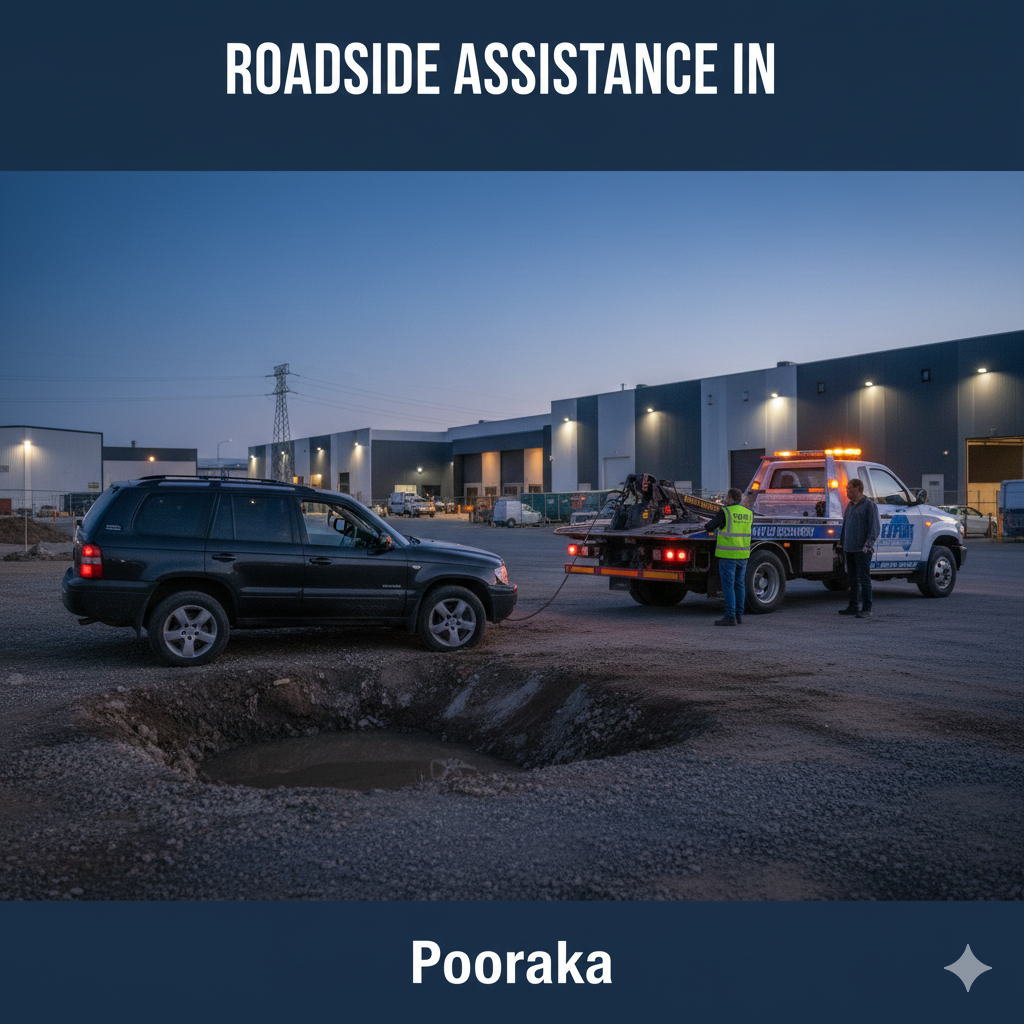
The Adelaide suburb of Pooraka is a central industrial zone filled with warehouses, distribution centres, transport depots, food-manufacturing plants, logistics yards and other commercial traffic. With hundreds of delivery trucks, forklifts, vans and machinery units on the road and working sites every day, vehicles often become immobilised in the area. Common scenarios include bogged trucks in the back of warehouses, pallet jacks wedged in loading docks, fleet vans breaking down in travel lanes and more.
This article provides a detailed overview of how professional towing and recovery specialists rescue vehicles stuck inside Pooraka’s commercial and industrial areas. It also outlines the specific techniques, tools and safety considerations used, and the nearby suburbs such as Blair Athol, White Hill, Gulfview Heights, Kudla and others where industrial-zone stuck-vehicle recoveries also commonly occur.
Also Read:- Stranded on South Eastern Freeway, SA? Here’s How to Get Help Fast
Why Pooraka’s Industrial Environment Poses Recovery Challenges
Pooraka is unique because it combines large industrial and commercial complexes with narrow internal laneways, uneven yard surfaces and high-traffic transport operations.
Site layouts often feature:
- Tight warehouse and depot access lanes
- Soft, unsealed or gravel loading-bay ground surfaces
- Deep drainage areas or ditches in yards
- Sharp turning circles for large vehicles
- Steep access ramps into loading bays or storage areas
- Car park undercrofts with low clearance heights
These obstacles and environments make it easy for both large and smaller vehicles to become bogged or immobilised inside these sites.
Pooraka also closely adjoins industrial, semi-rural and farming districts such as Wasleys, Wattle Flat and Kudla. Off-road bogging in these suburbs also often contributes to recovery requirements and demand.
Common Causes of Vehicles Getting Stuck in Pooraka
1. Bogged Trucks on Unsealed Industrial Yards
Seasonal rainfall can soften gravel yards or non-sealed warehouse surfaces. This causes trucks and trailers to quickly sink.
2. Delivery Vans Breaking Down on Loading Bays
Loading bays are often tight, obstructed or cluttered with pallets and machinery.
3. Forklifts and Machinery Stuck on Ramps and Slopes
Pooraka has many complexes with loading bay ramps and pallet-moving platforms raised off the ground.
4. Trailers Jack-Knifed in Tight Corners
Industrial cul-de-sacs, especially behind large distribution centres, create small turning circles. This can cause trailers to misalign with tractor units.
5. Commercial Vehicles Immobilised by Mechanical Failure
Fleet vans may experience engine or fuel system problems, hydraulic failures or electrical faults.
6. Heavy Vehicles Stuck in Mud at Construction Sites
Adjoining semi-industrial or construction suburbs like Tungkillo, White Hill and Wattle Flat often experience this.
Pooraka Vehicle Recovery How-To Guides
Step 1: Site Condition Assessment
Operators first survey the.
- Ground stability
- Access or working clearance around the vehicle
- Vehicle load weight and distribution
- Angle of vehicle immobilisation
- Road or site obstructions, such as pallets and equipment
- Safety hazards such as forklifts, machinery or pedestrians
The evaluation allows the recovery team to determine the most efficient method to use, whether winching, lifting, towing or repositioning.
Step 2: Selecting the Right Equipment
The operator may then utilise it.
- Industrial-grade winches
- 4×4 recovery units
- Heavy-duty underlift towing systems
- Tilt trays or flatbed trucks
- Low loaders for machinery units
- Appropriate recovery straps, chains and shackles
- Stabiliser legs for safe lifting
The compact towing units for industrial sites are crucial in Pooraka. They must fit into the tight spaces between storage bays and forklifts.
Step 3: Stabilising the Immobilised Vehicle
Ensuring stability is critical to prevent a bogged or tilted vehicle from sinking further or being damaged.
Operators may:
- Position timber blocks or blocks of wood
- Use load-rated cribbing
- Place wheel chocks
- Set down ground reinforcement mats.
The steps stop the vehicle from shifting further during extraction.
Step 4: Pulling or Winching from a Safe Angle
Industrial-area extractions often use angled winching to correct vehicle tilt or immobilisation. Operators will select a safe direction that avoids.
- Damage to site infrastructure
- Pulling the vehicle towards roads and traffic
- Colliding with stored goods or other equipment
Dual-line winching is often required in these situations for calibrated pull tension and strength.
Step 5: Loading or Towing Vehicle Out of the Area
Once free, the unit is.
- Taken to a mechanic
- Loaded onto a tilt tray or flatbed
- Returned to another location on-site
- Moved to a safer location for inspection
If the vehicle is a commercial fleet unit, operators often liaise with fleet managers to identify a safe drop-off point.
Specialised Industrial-Recovery Techniques
1. Vertical Extraction of Machinery
Machinery such as forklifts often becomes bogged down front-first from weight imbalance. Operators use precision hoisting or low-angle winching to lift and reposition the machine safely.
2. Trailer Straightening for Jack-Knifed Units
Jack-knifing is a common problem for trailers inside Pooraka’s tight loading bays. Two experts use it.
- Controlled winching and tensioning
- Vehicle pivot repositioning
- Axle alignment assistance
Pulling techniques that don’t damage the trailer frame.
3. Heavy-vehicle Underlift Recovery
Underlift recovery using a system attached to the front or rear axle can extract buses or rigid trucks stuck in tight spaces. The underlift method extracts the unit without requiring it to be fully elevated.
4. Off-Road Recovery Techniques
As Pooraka neighbours semi-rural suburbs such as Cherryville, Heathfield, Tungkillo and Wattle Flat, many off-road machinery bogging jobs also occur.
Recovery methods include:
- Snatch strap pulling and winching.
- Ground anchor recovery
- Dual 4×4 off-road recovery vehicles
- Controlled reverse winching
All these methods are also used in Pooraka if a truck or large vehicle slips off sealed ground during rainfall.
Nearby Suburbs of Pooraka With Industrial Recoveries
Surrounding suburbs that also experience high volumes of commercial vehicle traffic and stuck incidents include:
Blair Athol
Dense commercial blocks with fast-moving traffic create frequent breakdown bottlenecks.
Gulfview Heights
Hilly terrain, which leads to increased vehicle tilt immobilisations.
Kudla
Industrial and agricultural cross-usage, which results in machinery bogging and truck extraction.
Cherryville
Narrow and heavily forested roads, which need specialist recovery for slip immobilisation.
Heathfield
Steep gradients also complicate truck and machinery extraction.
Wattle Flat & Tungkillo
Frequent bogging from rural ground surfaces.
White Hill
Rough, uneven surfaces around workshops and businesses that lead to forklift and light-truck recovery.
Wasleys
Predominantly agricultural machinery towing and recovery requirements.
North Adelaide
Commercial fleets often break down in congested commercial areas, requiring precise towing, even though it’s not industrial.
The locations also highlight the importance of using versatile and adaptable towing operators with the capability of performing industrial, rural and metropolitan recoveries.
Also Read:- Do Tow Trucks Have to Report Accidents?
Why Professional Industrial Area Recovery in Pooraka is Important
1. Prevents Damage to Vehicles and Property
- Industrial yards are filled with
- Storage racks and shelving units
- Mobile machinery
- Pallets and equipment
- Loading and unloading tools
- Employees and contractors
Incorrect extraction can result in thousands of dollars’ worth of damage.
2. Reduces Business Downtime
- An immobilised delivery or fleet vehicle can halt.
- Scheduled or time-critical deliveries
- Warehouse or distribution centre unloading operations
- Internal site logistics movements
- Inefficient extraction can exacerbate operational disruption.
3. Ensures the Safety of People and Equipment on Industrial Sites
Safety is paramount on industrial sites, and professional tow operators follow strict safety protocols such as.
- Isolating the work area from traffic and pedestrians
- Selecting rated recovery equipment
- Communicating with site supervisors and contractors
- Handling vehicle loads per safety guidelines
Commercial vehicle towing and recovery services near me. Tow Expert is able to perform these methods to protect people and machinery.
4. Maintains Legal and Insurance Compliance
- Professional recovery ensures:
- Insurance cover is not invalidated.
- Worksite safety regulations are not breached.
The vehicle is handled per manufacturer-approved lifting and load-handling guidelines.
How to Avoid Getting Stuck in Pooraka
Although some incidents cannot be avoided, they can be minimised through:
1. Regular Vehicle Maintenance
Perform preventative maintenance, especially on fleet vans and trucks.
2. Ground-Awareness Training
Drivers should be aware of soft ground, slopes and unsealed surfaces.
3. Managing Vehicle Weight
Overloading increases the risk of bogging.
4. Selecting Appropriate Routes
Try to avoid unmaintained or waterlogged areas near warehouses and storage areas.
FAQs
1. Can tow trucks reach tight warehouse areas in Pooraka?
Ans:-Yes. Many tow operators now use compact industrial recovery units with small turning circles that can navigate through loading bays and warehouse lanes.
2. What types of vehicles can be recovered inside industrial zones?
Ans:-Everything from light vans, utes and fleet cars to rigid trucks, forklifts, trailers and machinery units.
3. Do you offer off-road recovery for nearby rural suburbs?
Ans:-Yes. The operators can also perform off-road bogged-vehicle recovery for suburbs around Pooraka, like Wattle Flat, Tungkillo and Cherryville.
4. How long does it take for a tow truck to reach Pooraka?
Ans:-Arrival time is typically 20–45 minutes, depending on site location, traffic and access restrictions.
5. Can machinery be extracted from behind warehouses?
Ans:-Yes. Industrial tilt trays, low loaders and winching systems can safely extract forklifts, scissor lifts and more.