Ever found yourself scratching your head wondering whether your broken-down truck needs heavy or light towing services? You’re not alone. Understanding the difference between heavy vs light towing can save you time, money, and a whole lot of confusion when you’re stranded on the side of the road.
Picture this: you’re driving your trusty ute to work when suddenly it starts making that awful grinding noise. Your mate reckons you need a tow truck, but which type? The wrong choice could mean waiting hours for the right equipment or paying way more than necessary.
Let’s break down everything you need to know about towing classifications so you can make the right call when disaster strikes.
Learn What to Do If a Towing Company Scratches Your Car and the steps you can take to protect your rights and vehicle.
What is Light Towing?
Light towing refers to transporting vehicles that weigh under 4.5 tonnes (or roughly 10,000 pounds for our American friends). Think of it as the everyday hero of the towing world – handling the vehicles most Aussies drive daily.
Vehicles That Need Light Towing
Light towing covers a surprisingly wide range of vehicles:
- Passenger cars – sedans, hatchbacks, coupes
- Small SUVs and crossovers
- Light commercial vehicles – vans, small delivery trucks
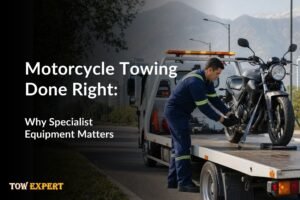
- Motorcycles and scooters
- Small trailers and caravans
- 4WDs under the weight limit
Most standard tow trucks you see cruising around Adelaide are equipped for light towing. They’re the workhorses that handle 80% of roadside emergencies.
Light Towing Equipment and Methods
Flatbed/Tilt tray trucks are the gold standard for light vehicle towing. Your car gets loaded onto a flat platform, keeping all four wheels off the ground. This method is safest for modern cars with complex electronics and all-wheel-drive systems.
Hook and chain towing is the old-school method you might remember from decades past. These days, it’s rarely used because it can damage your vehicle’s bumper or undercarriage.
Wheel-lift towing uses a metal yoke that cradles your car’s front or rear wheels. It’s faster than flatbed loading but not suitable for all-wheel-drive vehicles or cars with low ground clearance.
What is Heavy Towing?
Heavy towing handles the big boys – anything over 4.5 tonnes that light towing equipment simply can’t manage. We’re talking serious machinery that requires specialised equipment and experienced operators.
Vehicles That Require Heavy Towing
Heavy towing isn’t just about weight – it’s about having the right gear for substantial vehicles:
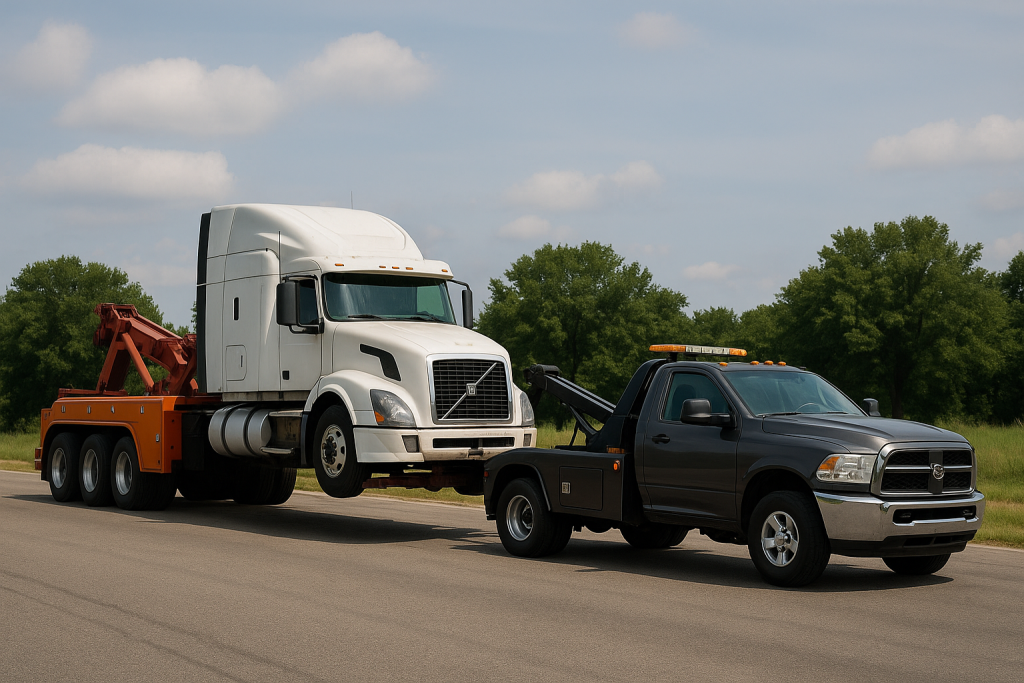
- Commercial trucks and semi-trailers
- Buses and coaches
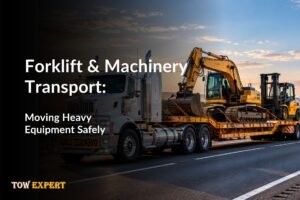
- Construction machinery – excavators, bulldozers, cranes
- Large motorhomes and RVs
- Agricultural equipment – tractors, harvesters
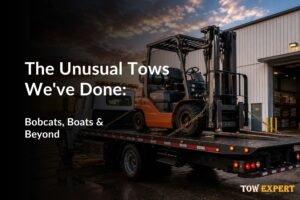
- Industrial vehicles – forklifts, shipping containers
- Large boats and marine equipment
Heavy Towing Equipment and Capabilities
Heavy towing requires specialised tow trucks with massive power and capacity. These aren’t your average roadside rescue vehicles.
Rotator tow trucks can lift and rotate heavy loads, perfect for overturned trucks or complicated recoveries. They’re like the Swiss Army knife of heavy towing.
Heavy-duty flatbed trucks feature reinforced beds and powerful winch systems. They can handle loads that would snap a regular tow truck’s cables.
Low-bed trailers transport extra-tall or wide equipment that won’t fit on standard flatbeds. Think of them as the moving truck for industrial equipment.
Key Differences: Heavy vs Light Towing
Weight Capacity and Vehicle Size
The most obvious difference is weight capacity. Light towing maxes out around 4.5 tonnes, while heavy towing can handle loads exceeding 80 tonnes.
But it’s not just about weight – vehicle dimensions matter too. A lightweight but oversized piece of equipment might still need heavy towing services due to its dimensions.
Equipment and Technology Requirements
Light towing uses relatively simple equipment that most tow truck operators can handle. Heavy towing requires specialised machinery worth hundreds of thousands of dollars.
Training requirements are vastly different too. Heavy towing operators need additional certifications and years of experience handling complex recoveries.
Pricing Structure Differences
Light towing typically costs between $100-300 for standard local jobs. Heavy towing starts around $500 and can reach several thousand dollars depending on the complexity.
Distance, time, and equipment all factor into heavy towing pricing. A simple 5-kilometre transport might be affordable, but a complex recovery operation from difficult terrain will cost significantly more.
Response Times and Availability
Light tow trucks are everywhere most companies can reach you within 30-60 minutes in urban areas. Heavy towing requires specialised equipment that’s not as readily available.
You might wait 2-4 hours for heavy towing services, especially in remote areas or during peak times. Planning ahead becomes crucial for scheduled heavy equipment transport.
When to Choose Light Towing
Ideal Scenarios for Light Vehicle Towing
Choose light towing when dealing with:
- Everyday breakdowns – your car won’t start, has a flat tyre, or engine trouble
- Accident recovery – minor collision damage requiring transport to a repair shop
- Roadworthy transport – moving a non-registered vehicle
- Motorcycle transport – when you can’t ride your bike safely
Cost Benefits and Quick Response
Light towing offers faster response times and lower costs. Most Adelaide metro areas see 30-minute response times during business hours.
The equipment is simpler and more widely available, keeping prices competitive. You’ll typically pay a flat rate plus per-kilometre charges.
Check out our Towing Service Price List to know what you can expect to pay in 2025 for reliable and affordable roadside assistance.
When Heavy Towing is Necessary
Commercial Vehicle Requirements
Any vehicle over 4.5 tonnes legally requires heavy towing equipment. Using undersized equipment isn’t just ineffective it’s dangerous and potentially illegal.
Commercial operators often have insurance requirements specifying appropriate towing methods. Using light towing for heavy vehicles could void your coverage.
Complex Recovery Situations
Heavy towing becomes essential for:
- Overturned trucks requiring rotator equipment
- Off-road recoveries where vehicles are stuck in difficult terrain
- Multi-vehicle accidents involving commercial vehicles
- Bridge strikes or vehicles stuck under low clearances
These scenarios require experienced operators with specialised training and equipment.
Safety Considerations
Light Towing Safety Protocols
Even simple light towing requires proper safety procedures:
- Vehicle inspection before loading
- Proper tie-down techniques to prevent shifting
- Weight distribution to avoid trailer sway
- Regular equipment maintenance and certification
Heavy Towing Risk Management
Heavy towing multiplies safety concerns exponentially. Operator certification isn’t optional – it’s essential.
Traffic management becomes crucial when dealing with large vehicles on busy roads. Many heavy towing operations require police escorts or road closures.
Environmental considerations matter too – heavy equipment recoveries can damage sensitive areas if not handled properly.
How Tow Expert Handles Both Light and Heavy Towing
When you’re stuck with a vehicle problem in Adelaide, you need a towing company that understands the difference between light and heavy towing requirements.
Tow Expert has built their reputation on providing exactly the right service for your situation. Their fleet includes both standard tilt tray trucks for everyday passenger vehicles and specialised heavy-duty equipment for commercial and industrial needs.
What sets them apart is their comprehensive approach to towing services. Whether you’re dealing with a broken-down Holden Commodore or a stuck excavator, their experienced operators assess each situation and deploy appropriate equipment.
Their 24/7 emergency response covers everything from motorcycles to machinery transport. The team’s years of experience mean they can quickly determine whether your situation requires light or heavy towing services – saving you time and money.
Tow Expert’s transparent pricing eliminates the guesswork around towing costs. They provide instant quotes based on your specific vehicle and situation, whether it’s a simple passenger car recovery or complex heavy machinery transport.
Their fully qualified operators handle both light and heavy towing with equal expertise. This versatility means one phone call gets you the right solution, rather than being transferred between different companies.
Choosing the Right Towing Service
Questions to Ask Towing Companies
Before calling for service, know these key questions:
- What’s the weight limit of your light towing equipment?
- Do you handle heavy commercial vehicles over 4.5 tonnes?
- What’s your estimated response time for my location?
- Are your operators certified for heavy equipment recovery?
Red Flags to Avoid
Watch out for towing companies that:
- Quote without seeing your vehicle – legitimate operators need details
- Promise unrealistic response times – 15 minutes in peak traffic isn’t realistic
- Can’t explain their equipment capabilities – experienced operators know their limits
- Refuse to provide written estimates – transparency matters
Conclusion
Understanding the difference between heavy and light towing isn’t just about vehicle weight – it’s about getting the right equipment, expertise, and service for your specific situation. Light towing handles your everyday passenger vehicles under 4.5 tonnes with quick response times and competitive pricing. Heavy towing tackles commercial vehicles and complex recovery situations with specialised equipment and experienced operators.
Know your vehicle’s weight and requirements before you need towing services. Having this information ready speeds up the process when you’re stranded. Choose a reputable towing company that offers both services and can properly assess your needs. The right expertise makes all the difference in getting you back on the road safely and affordably.
Next time someone asks about heavy vs light towing, you’ll know exactly what each service covers and when to use them.
Need expert towing advice or services in Adelaide? Contact Tow Expert today for professional assessment of your towing needs. Their experienced team provides both light and heavy towing solutions with transparent pricing and reliable service across Adelaide and surrounding areas.
Frequently Asked Questions
Q1: How do I know if my vehicle needs heavy or light towing?
Check your vehicle’s gross weight in the owner’s manual or registration papers. Anything over 4.5 tonnes requires heavy towing equipment. Most passenger cars, SUVs, and small commercial vehicles fall under light towing limits.
Q2: Is heavy towing more expensive than light towing?
Yes, heavy towing typically costs 2-5 times more than light towing due to specialised equipment, longer response times, and additional operator certifications required. Expect to pay $500+ for heavy towing versus $100-300 for light services.
Q3: Can a light tow truck damage my heavy vehicle?
Absolutely. Using undersized equipment can damage your vehicle’s transmission, suspension, or body. It also poses safety risks and may violate insurance requirements. Always use appropriately rated equipment for your vehicle’s weight class.
Q4: How long does it take to get heavy towing services?
Heavy towing response times average 2-4 hours in metropolitan areas, longer in remote locations. The specialised equipment isn’t as readily available as light tow trucks, so plan accordingly for non-emergency situations.
Q5: Do I need special permits for heavy vehicle towing?
In most cases, the towing company handles permits and compliance issues. However, oversized loads may require police escorts, road closures, or special routing. Discuss these requirements with your towing operator beforehand.