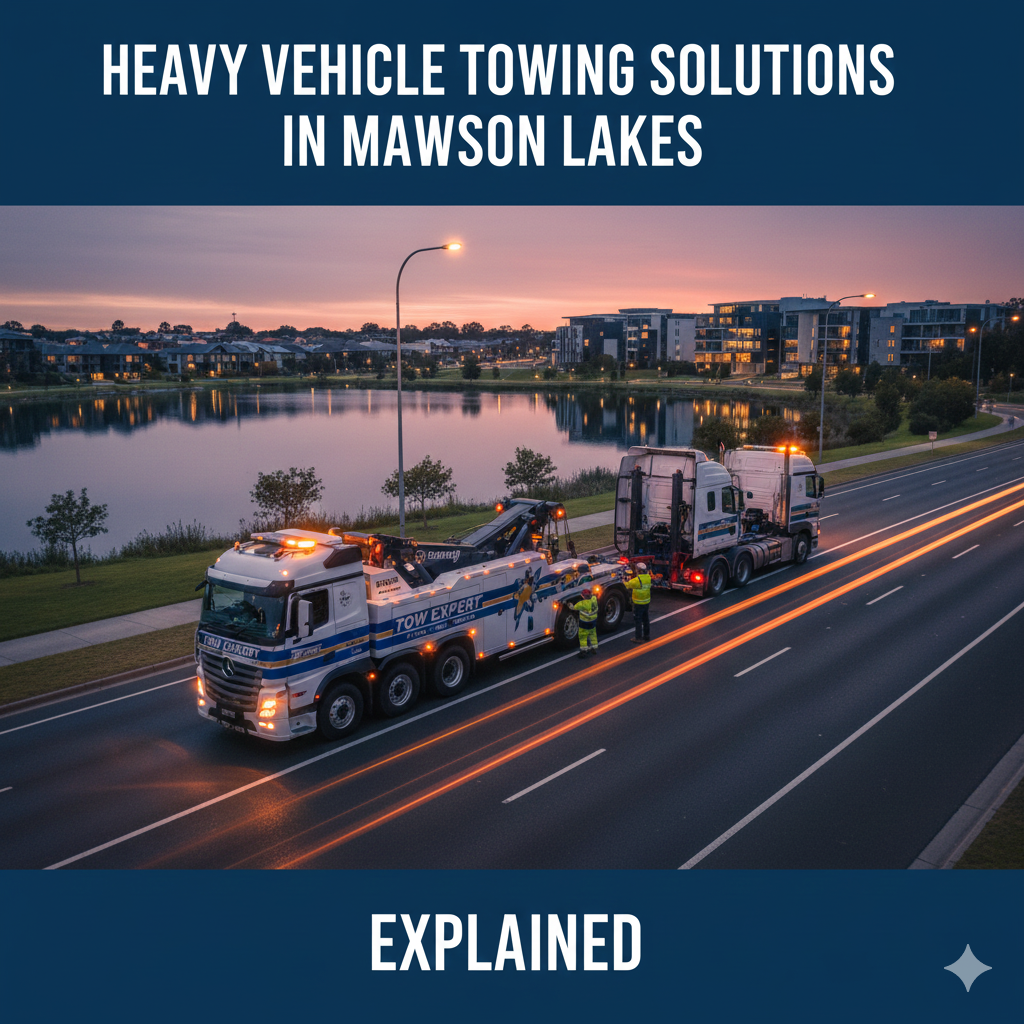
Heavy vehicle towing is one of the most complex services in the towing and recovery industry. Unlike regular passenger cars, the breakdown of a truck, bus, machinery unit, or commercial fleet vehicle in Mawson Lakes presents challenges that are significantly more complex. Weight distribution, height, axle position, recovery angle, and load security all factor in. For operators servicing the rapidly growing industrial belt surrounding Mawson Lakes, access to trusted heavy-duty towing solutions is essential.
This article explains heavy vehicle towing and what makes it different, some of the key equipment required, and why it is so important for operators working in Mawson Lakes and nearby suburbs like Andrews Farm, Osborne, Cromer, and Kent Town to work with the right heavy towing provider.
What is Heavy Vehicle Towing in Mawson Lakes?
Mawson Lakes is home to a significant number of industrial facilities, logistics hubs, commercial workshops and lies on some of the busiest arterial routes and commercial thoroughfares in Adelaide.
This includes:
- Main North Road and Salisbury Highway
- Industrial and commercial delivery routes
Freight transport corridors to Edinburgh and the Northern Expressway
As a result, heavy vehicles are always on the move. When a breakdown or road accident occurs, it can cause significant disruption to business operations, if not entire suburbs and main traffic arteries.
Heavy vehicle towing services use specialized recovery systems engineered specifically for:
- Trucks (light, medium, and heavy rigid)
- Semi-trailers
- Buses and coaches
- Earthmoving machinery
- Construction equipment
- Agricultural equipment
- Fleet service vehicles
- Industrial transport units
In contrast to standard tow trucks, heavy-duty recovery vehicles are equipped with extended capacity underlifts, integrated booms, stabilizers and reinforced hydraulic systems. This allows them to safely lift and tow multiple tonnes of vehicles within legal GDV and axle-load limits.
Heavy Vehicle Towing vs. Standard Towing: 3 Differences
1. Load-Bearing Capacity
Heavy tow units are required to deal with substantially higher loads. Many heavy-duty tow trucks in the Mawson Lakes area are rated for.
- 20–35 tonne towing capacity
- 10–20 tonne lifting capacity
- Extended wheelbase reach
- Heavy stabilizer legs
These are important capabilities to ensure safe lifting and movement, especially when a bus or a fully loaded truck is stuck in awkward positions.
2. Specialized Recovery Operators
Drivers and recovery operators need training and certification.
- Axle load and weight distribution
- Advanced rigging techniques
- Vehicle stabilisation
- Winch operation and safety
- Air-brake system management
- Safe recovery from hazardous areas
This level of skill and knowledge minimizes the risk of mechanical damage or incorrect recovery that can lead to equipment failure and vehicle immobilization.
3. Infrastructure Constraints
The built environment around Mawson Lakes features narrow commercial laneways, multi-storey carpark entry ramps, uneven industrial surfaces, high traffic roundabouts and chokepoints. Heavy towing units need to access these with as little disruption to surrounding businesses as possible.
Heavy Vehicle Towing: Common Types of Heavy-Vehicle Incidents
Heavy vehicle towing and recovery teams are often called out to respond to incidents.
- Truck breakdowns on commercial delivery runs
- Overheated long-haul vehicle engines
- Hydraulic failures on buses and coaches
- Construction equipment malfunctions at building sites
- Semi-trailers bog down in soft ground or on uneven surfaces.
- Road accidents with heavy rigid trucks
Nearby towns and suburbs with similar industrial traffic profiles, including Andrews Farm, Darlington, Kent Town and Osborne, all require rapid response to minimize business downtime.
Also Read:- “Wheel Bearings: What They Are and Why They Matter in Towing“
Heavy Vehicle Towing: Different Types of Heavy Vehicle Towing Solutions
1. Underlift Towing
This is the most common type of heavy towing in Mawson Lakes. An underlift system secures the front or rear axle to allow stable and controlled towing.
It is ideal for:
- Rigid trucks
- Medium-heavy commercial vehicles
- Buses and coaches
2. Integrated Boom Towing
Boom tow trucks are fitted with rotating recovery booms for extended lifting reach.
These are ideal for:
- Jack-knifed trailers
- Vehicles in ditches
- Rollovers and overturns
- Off-road incidents
Boom tow units are used more often in places with hilly terrain or narrow roadways, such as Inglewood or Cleland.
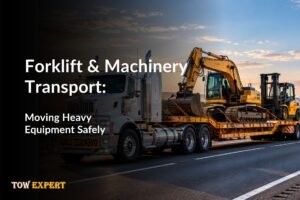
3. Machinery Transport
Heavy tow operators regularly move heavy machinery such as.
- Excavators
- Skid-steers
- Forklifts
- Tractors
- Earthmoving equipment
Locations such as Cromer, Riverglen and Hamilton require machinery relocation for agricultural and land-services applications.
4. Heavy Recovery Winching
Heavy vehicle recovery winching systems are utilized to pull vehicles that are.
- Bogged
- Rolled
- Embedded in mud or soft shoulders
- Wedged between barriers or poles
Dual-line winches with high-pull capacity are often required in places like Osborne or Goodwood, where industrial areas have tight entry access points and mechanical extraction is difficult.
5. Long-Distance Heavy Towing
When vehicles require interstate transport, or transfer to another repair depot or specialist centre, long-haul towing services are used. Kent Town is home to several heavy-duty mechanical and fleet repair workshops, and heavy vehicles are often delivered from Mawson Lakes for repairs.
Heavy Vehicle Towing Equipment
Heavy-duty operators work with advanced heavy towing equipment and towing equipment such as.
- High-capacity underlift systems
- Rotating recovery booms
- Rear outriggers for added stability
- Dual-winch recovery setups
- Low loaders and tilt tray trailers for machinery
- Air-cushion recovery systems (for rolled vehicles)
- Load binders, safety straps and chain systems
Each piece of equipment is selected based on the specific vehicle type, recovery angle, and location to minimize the risk of collateral damage and ensure safe recovery.
Why Local Knowledge is Important
Towing operators with a local presence in Mawson Lakes and surrounding suburbs, including Andrews Farm, Goodwood, and Kent Town, offer several benefits over operators located further afield:
1. Faster Response Times
Local teams know the quickest routes to avoid congestion and peak industrial traffic.
2. Minimize Downtime
Heavy vehicle breakdowns can cost transport operators thousands per hour of lost business. Faster recovery also reduces.
- Delivery delays
- Driver wait times
- Supply chain interruptions
3. Minimize Risk of Damage
Local operators are better aware of site-specific hazards, such as
- Tight corners or low clearances near commercial complexes
- High-traffic pedestrian and vehicle intersections
- Restricted-height access points
- Construction and work zones
4. Compliance with Standards
Heavy vehicle towing has strict regulatory requirements.
- NHVR standards
- Road Vehicle Standards Act specifications
- Weight-distribution guidelines
- Correct tie-down procedures
Local teams have more consistent regulatory knowledge and application.
Choosing the Best Heavy Towing Service in Mawson Lakes
When working with a towing service, consider the following questions to find the right match for your needs.
1. Capability and Equipment
Do they have heavy-duty underlifts, integrated booms, winches, tilt trays and other specialized equipment?
2. 24/7 Availability
Breakdowns happen 24 hours a day. A dependable operator must be on call and ready to assist at any time.
3. Insurance and Certification
Always ensure the towing company is fully insured for high-value commercial equipment.
4. Fleet Size
The bigger the fleet, the faster they can deploy multiple trucks to handle large job volumes.
5. Experience With Your Vehicle Type
Different vehicle types have different recovery requirements. Ask the operator if they have experience with.
- Buses
- Semi-trailers
- Rigid trucks
- Heavy machinery
- Specialty commercial vehicles
6. Service Area Coverage
A good heavy-duty recovery service should cover not just Mawson Lakes but also nearby suburbs such as.
- Andrews Farm
- Cleland
- Cromer
- Osborne
- Kent Town
- Darlington
- Goodwood
This provides seamless support across the region.
Tips to Prevent Heavy Vehicle Breakdowns
Mechanical problems can happen unexpectedly, but scheduled maintenance can significantly reduce the risk of roadside failures.
Try:
- Regular engine diagnostics and inspections
- Brake and air-system checks
- Load management and planning
- Tyre pressure monitoring and maintenance
- Radiator and cooling system checks
- Scheduled lubricant and fluid servicing
Proper maintenance helps keep vehicles in peak condition and reduces the risk of towing callouts.
Also Read:- “Why Airbag Suspension Kits Are Perfect for Heavy Loads“
FAQS
1. How much weight can a heavy tow truck lift?
Ans:-The maximum weight capacity for a heavy-duty tow truck in South Australia is 20–35 tonnes.
2. Can heavy-duty tow trucks handle articulated vehicles?
Ans:-Yes. Heavy tow trucks have integrated underlifts, booms, stabilizers, and winches for towing and recovering semi-trailers safely.
3. How long does it take for a heavy-duty tow truck to arrive?
Ans:-Response times depend, but local operators usually reach the Mawson Lakes area within 30–60 minutes.
4. Do towing companies transport machinery?
Ans:-Yes. Machinery transport is a core service, especially for the surrounding suburbs of Cromer, Riverglen and Hamilton.
5. Is it safe to tow a heavily loaded truck?
Ans:-Yes, but heavy towing follows strict safety protocols to ensure stability. Heavily loaded vehicles may need to redistribute or partially unload before towing.